Château de Meyrargues, Medieval castle in Meyrargues, France
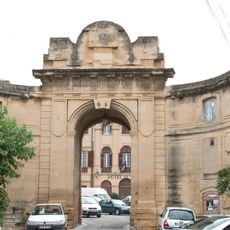
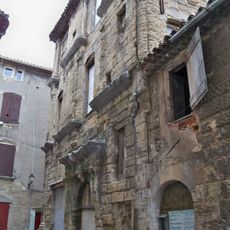
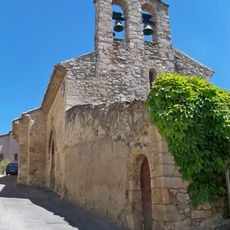
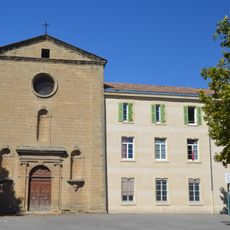
The Château de Meyrargues stands between the vallon des Arcs and the village, 15 km north of Aix-en-Provence. Its rough beige masonry forms several sections of different heights: a flat-roofed block on the left, a main facade under reddish tiles on the right, and a large arched opening with a dark red door at the far right.
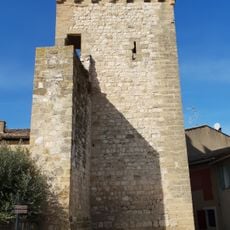
A first defensive structure was probably built on the site in the 10th century, between the vallon des Arcs and the village. The fortress was reworked in the 15th and 17th centuries, and the d'Allagonia family added four defensive towers in the Middle Ages. Jean II Le Meingre, known as Boucicaut, marshal of France, owned it in the early 15th century and had works carried out between 1406 and 1408.
The château passed through Provençal families: the Baux, then the d'Alagonia from the 15th century, the de Valbelle in the 17th century and the d'Albertas, Aix parlementaires. Louis d'Alagonia was beheaded on the place de Grève in Paris on 19 December 1605 for plotting against Henri IV; his brother Honoré, a Knight of Malta, received the estate back by royal letters patent of 31 January 1606.
The castle is not open to the public: it was converted into flats in 2016, so there is no visit to plan. The park, listed as a site since 10 April 1952, belongs to the commune. The building stands between the vallon des Arcs and the village, 15 km north of Aix-en-Provence.
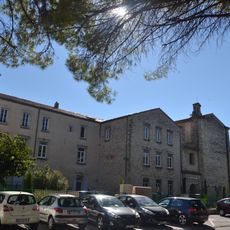
The castle was divided into 26 apartments in 2016, five of them social housing, after a real-estate company specialising in historic monuments bought it in 2015. Its park has been listed as a protected site since 10 April 1952 and now belongs to the commune of Meyrargues.
The community of curious travelers
AroundUs brings together thousands of curated places, local tips, and hidden gems, enriched daily by 94,048 contributors worldwide.