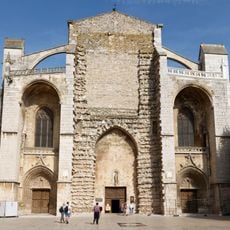
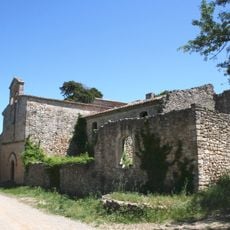
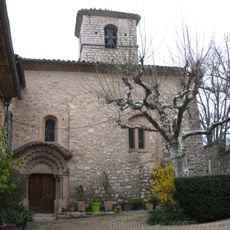
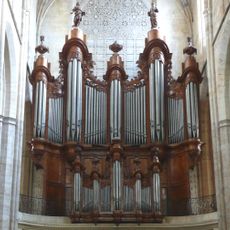
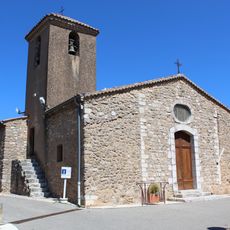
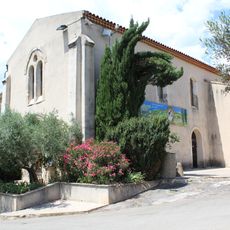
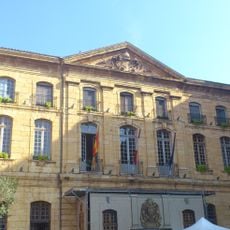
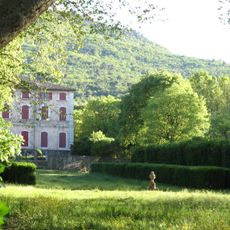
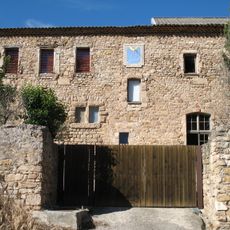
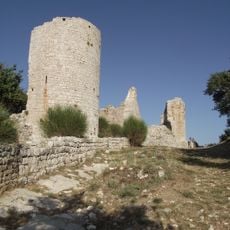
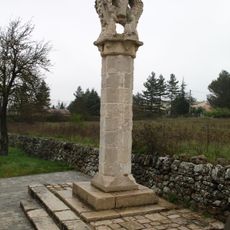
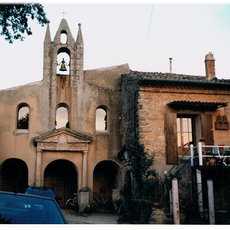
Couvent des Dominicains de Saint-Maximin-la-Sainte-Baume, Medieval Dominican convent in Saint-Maximin-la-Sainte-Baume, France.
The Dominican convent is a monastic complex with four connected buildings arranged around a central courtyard, designed according to medieval principles. The layout follows the classic pattern of religious communities with a chapel, refectory, residential cells, and covered walkway.
Its roots trace back to the 5th century when monks from the Cassianite tradition lived here, with Benedictines later taking over management. The Dominicans arrived after the discovery of Mary Magdalene's relics in 1295 drew pilgrims to the site.
The convent is named for the Dominicans, who served here from 1295 until the French Revolution and again from 1859 to 1957. The adjacent Basilica of Sainte-Marie-Madeleine holds a relic of Mary Magdalene's skull and remains a stop on the pilgrimage to the Sainte-Baume grotto.
The former convent buildings now house a hotel, which is currently closed, and the site is owned by the Département du Var, which is carrying out excavation and restoration work. The complex is a classified monument historique (since 3 July 1969). Expect parts of the buildings and courtyard to be closed off by the works; the medieval museum and cultural centre are planned for 2032.
The convent was suppressed during the French Revolution and the buildings were turned into a prison, but the Dominicans returned in 1859 when Henri Lacordaire bought them back and re-established a priory. The community stayed until 1957, when it moved to Toulouse. The friar and Assyriologist Jean Bottéro lived here from 1932 for about ten years.
The community of curious travelers
AroundUs brings together thousands of curated places, local tips, and hidden gems, enriched daily by 93,974 contributors worldwide.