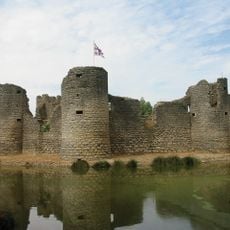
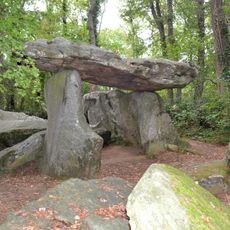
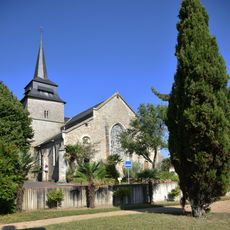
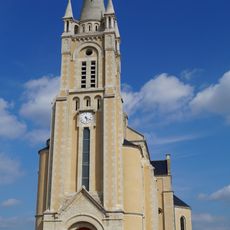
Manoir de la Tuderrière, Manor estate in Apremont, France.
Manoir de la Tuderrière is a fortified manor on a schist outcrop above a valley in Apremont. Its two offset wings, with chevronnières and a steep slate roof, form a rectangular plan around a square core. Inside are eight chimneys on moulded bases, a French ceiling, a vaulted cellar and a bread oven. A gatehouse with medieval doors and two carved heads stands at the entrance.
The property appears in records from the 11th century as a fortified site and later became the residence of the Durand family during the 17th century until the French Revolution. Its transformation from military outpost to family home reflects the changing needs of the region over time.
The two carved heads on the gatehouse porch were apotropaic figures, meant to turn away harm. The chapel was consecrated in 1530; a 1777 episcopal visitation described it as well kept, unlike the castle chapel then used as a granary. In 1793 its priest, Jean Charles Durand de La Tudairière, was condemned to death.
The manor provides guest rooms and can be rented for events, making it accessible for visitors exploring the Vendée region. Those interested in medieval architecture should allow time to examine the interior spaces and architectural details carefully.
Radiocarbon dating of the gatehouse timber places its construction between 1390 and 1414, confirmed by dendrochronology. The same study found roof timbers restored in 1590, still set within the medieval chevronnières. Symbols recorded on the property include Templar crosses, and Masonic marks appear on the more recent chimneys.
The community of curious travelers
AroundUs brings together thousands of curated places, local tips, and hidden gems, enriched daily by 93,175 contributors worldwide.