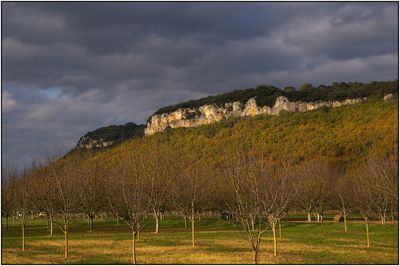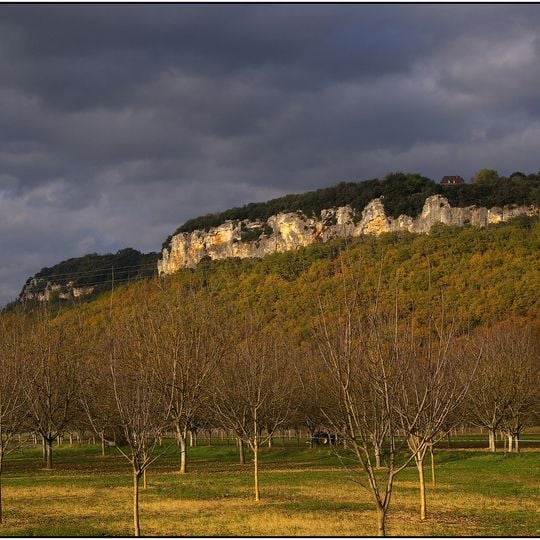
Falaise du Conte, Prehistoric caves in Cénac-et-Saint-Julien, France
The limestone cliffs hold about twenty caves and rock shelters spread across the cliff face in the Dordogne region. These natural spaces vary in size, with some forming spacious living areas and others serving as small recesses in the rock.
The caves formed naturally in the limestone and were used by humans as dwellings starting in the Paleolithic period. They received official protection as historical monuments in 1997 and now stand as registered archaeological sites.
The caves show traces of how early people made use of rock shelters and natural spaces for protection and daily life. Visitors can observe the connection between these ancient inhabitants and the landscape around them.
Parts of the site are privately owned while other sections are public, so visits should be arranged beforehand. It helps to contact local authorities ahead of time to learn which areas are open and how much time to set aside.
Several of these caves were systematically studied starting in the mid-20th century, revealing objects thousands of years old within the rock. These discoveries have helped researchers understand how people actually lived and what they used in daily life.
The community of curious travelers
AroundUs brings together thousands of curated places, local tips, and hidden gems, enriched daily by 60,000 contributors worldwide.