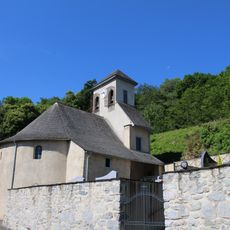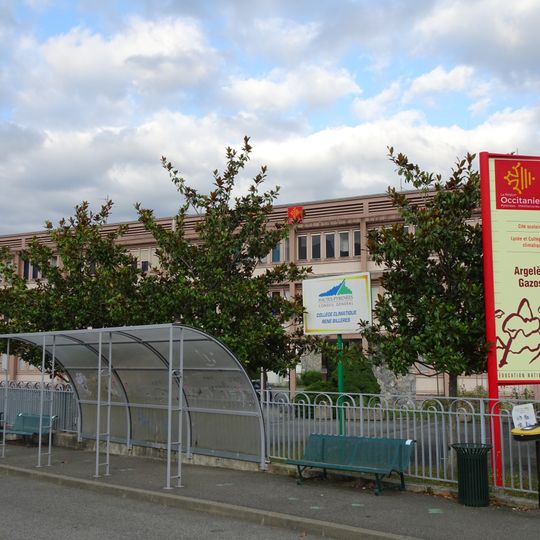
Lycée climatique d'Argelès-Gazost, Historical school building in Argelès-Gazost, France
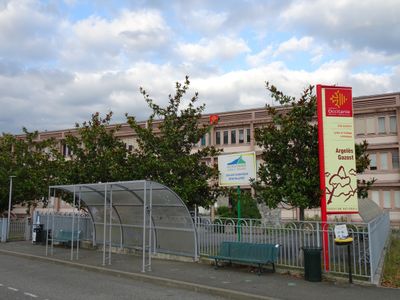
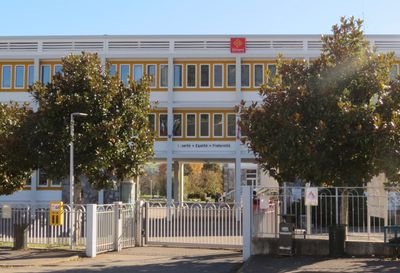
The Lycée Climatique is a school in Argelès-Gazost with modern architecture designed to maximize natural light, featuring separate areas for different grade levels. The campus spans a large property with functional structures that serve students from middle school through high school.
Construction was envisaged in June 1948 and officialised in 1949, driven by mayor Marcel Lemettre to counter rural exodus in this mid-mountain area, with backing from René Billères, Hautes-Pyrénées deputy from 1946 and later education minister. Work began in May 1952 on eight hectares of farmland near the thermal park; the open-air lycée opened in 1955 while still unfinished and became a cité scolaire in 2005.
The school displays artworks by renowned artists such as Gustave Singier, Etienne Hajdu, and Alfred Manessier throughout its grounds. These pieces form part of the daily school experience, showing how art and education are woven together here.
The property is expansive with both indoor and outdoor teaching spaces, including open-air areas for classes. Keep in mind that this is an active school building and access may be restricted during certain times.
The school's model was shown in the French pavilion at the 1958 Brussels International Exposition, judged representative of French modernity. Chief architect André Remondet, open to Bauhaus and Le Corbusier ideas, used Batsurguère stone for the base and gables and slate for outdoor floors and some steps. It is the only building of its type in the Sept Vallées.
The community of curious travelers
AroundUs brings together thousands of curated places, local tips, and hidden gems, enriched daily by 93,299 contributors worldwide.