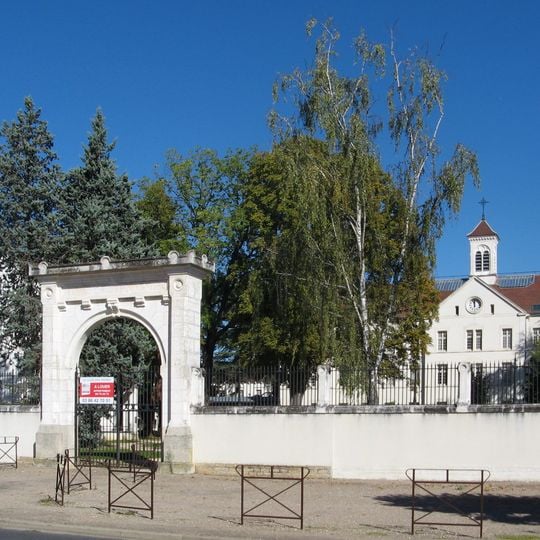
Ancien hôpital psychiatrique de l'Yonne, Historical monument and former psychiatric hospital in Auxerre, France
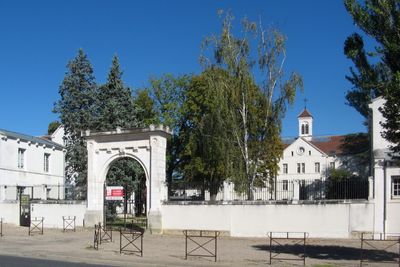
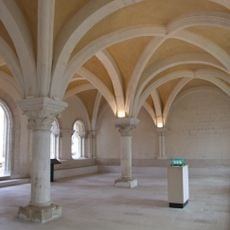
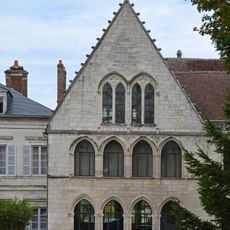
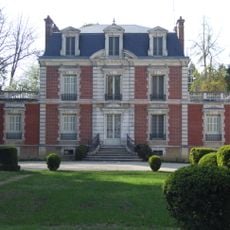
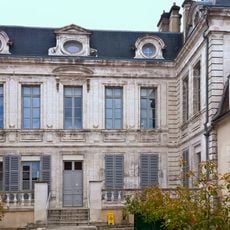
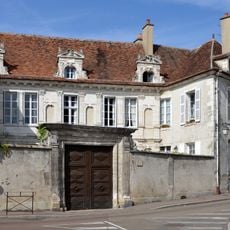
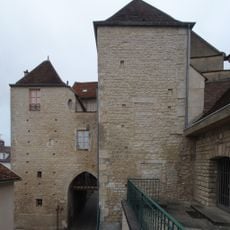
The Ancien hôpital psychiatrique de l'Yonne in Auxerre occupies a 14-hectare walled site laid out on an east-west axis. At its centre stands the administrative building facing a park, flanked by five two-storey pavilions on each side, men's to the south and women's opposite, all linked by covered galleries. A white stone gateway with a round arch and metal gates opens onto the grounds, and a white wall topped by an iron fence runs toward a building with a clock tower.
Bishop Nicolas Colbert of Auxerre funded a hospice for poor orphans and the elderly beside the Notre-Dame-de-Lorette chapel, authorised by letters patent of March 1675. After the law of 30 June 1838 the departmental asylum was created; doctor Girard de Cailleux, medical director from 1840, pushed for a new building from 1844, completed in 1858 with support from Baron Haussmann, prefect of the Yonne from 1850. Renamed hôpital psychiatrique de l'Yonne in 1937, requisitioned by the Waffen SS in 1944, it became a specialised psychiatric centre in 1980 and was converted into housing in 2005.
The name changed from asile départemental de l'Yonne to hôpital psychiatrique in 1937, and the site is now the residence Le Clos des vignes. The separate men's and women's pavilions, linked by covered galleries, show the gender segregation of 19th-century asylum care. The hospital's model was reused for asylums around Paris in the 1860s, including Sainte-Anne.
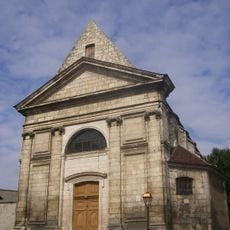
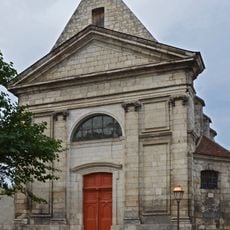
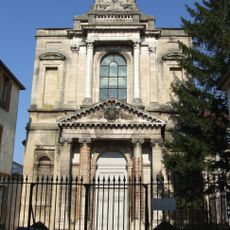
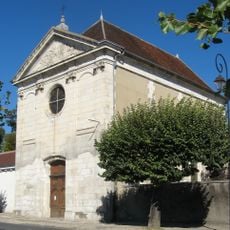
The former asylum is now the Clos des Vignes residence, so the pavilions and covered galleries are private homes and not open to visitors. The chapel Notre-Dame de Lorette, rebuilt in 1761, has its main entrance on the route de Paris, and the 14-hectare walled grounds with the clos de la Chaînette vineyard are best seen from the surrounding streets.
The grounds hold the clos de la Chaînette, described in the sources as the oldest attested vineyard in France, planted on the land between the buildings and the outer wall. Water for 300 patients came from the fontaine Sainte-Marguerite over a kilometre away, carried by a 340 m tunnel and 1,110 m of pipe, finished in 1846.
The community of curious travelers
AroundUs brings together thousands of curated places, local tips, and hidden gems, enriched daily by 94,037 contributors worldwide.