National prison museum, Prison museum in Fontainebleau, France.
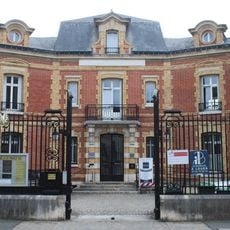
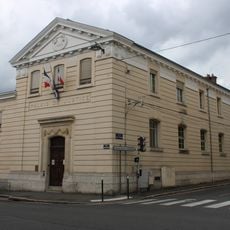
The National Prison Museum occupied the former maison d'arrêt de Fontainebleau, a building erected in 1845 on a Pennsylvanian model by the Seine-et-Marne departmental architect, who also designed the prisons of Meaux and Coulommiers. Its 45 cells of 9 m² were set over two floors around a rotunda observation post, with 5-metre perimeter walls. The museum closed on 31 December 2010; the stone gateway with dark green doors and a triangular pediment still marks the entrance.
The building was constructed in the 19th century as a modern detention facility and operated as a working prison for many decades. It experienced German occupation during World War II before eventually becoming a museum dedicated to penal history.
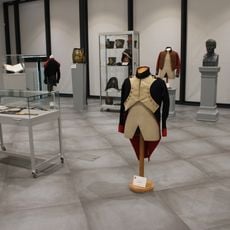
The museum's name comes from its national scope: collections were gathered from prisons across France and overseas in 1967, 1975, 1981 and 1982. Among the seized items were forbidden objects found during cell searches, improvised gadgets, sheets braided for escape attempts and objects swallowed by inmates. A lithograph by Horace Vernet, Les Forçats (1840), was among the pieces.
The museum closed on 31 December 2010 and the building passed to a private buyer at auction in February 2016, so there is no visiting access. The collections were transferred to the École nationale d'administration pénitentiaire in Agen, where the centre de ressources sur l'histoire des crimes et des peines can be consulted. A museum of penal history is announced to open in 2027.
The museum closed on 31 December 2010 and its collections went to the École nationale d'administration pénitentiaire in Agen. Among the seized items were improvised gadgets, sheets braided for escape attempts and objects swallowed by inmates. The building was sold at auction in February 2016 to a developer planning flats.
The community of curious travelers
AroundUs brings together thousands of curated places, local tips, and hidden gems, enriched daily by 92,836 contributors worldwide.