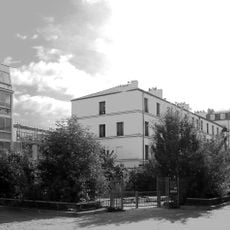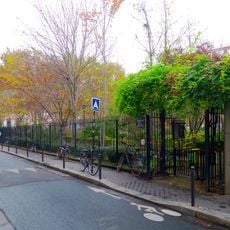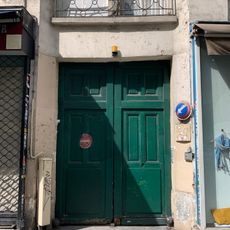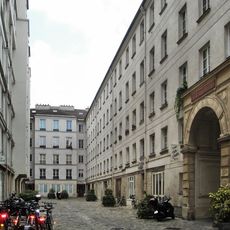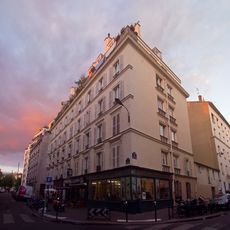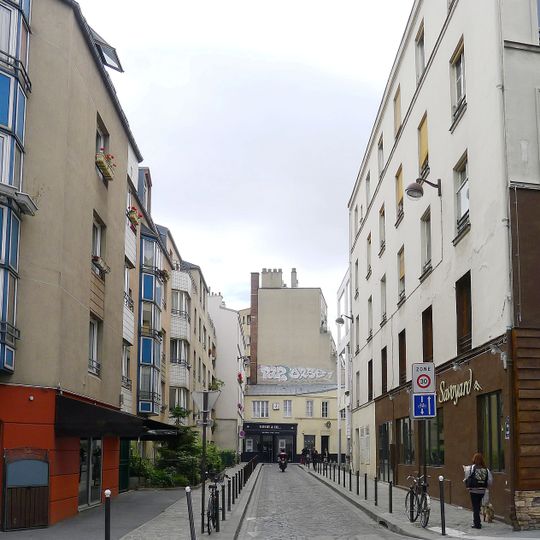
Passage de la Main-d'Or, thoroughfare in Paris, France
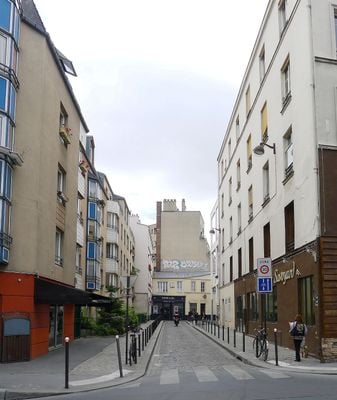
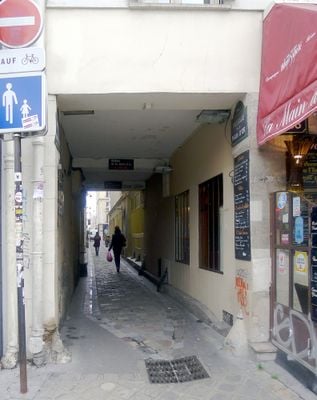
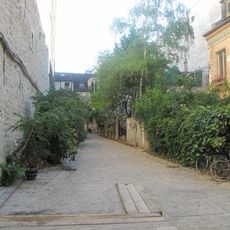
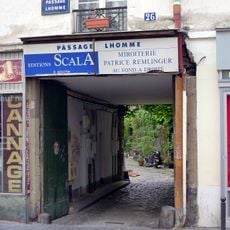
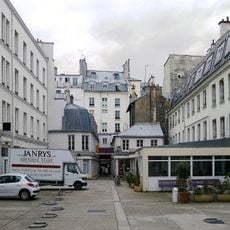
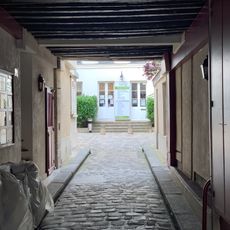
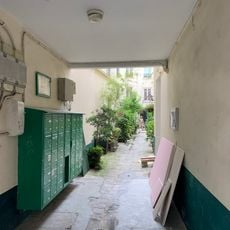
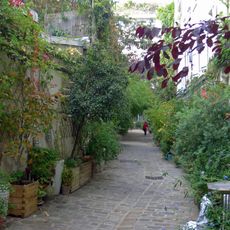
The Passage de la Main-d'Or is a 250-metre paved passageway in the 11th arrondissement, running north from rue du Faubourg-Saint-Antoine to rue de Charonne. Its first 70 metres, south of rue de la Main-d'Or, form a narrow semi-pedestrian stretch that passes through a building; beyond, vehicles can circulate. After nos 15 and 16 it bends north-east for a few metres before resuming its northward line.
The passage was officially integrated into the city's street system in 1966, after long being known as 'Cour de la Main-d'Or'. The area developed as a hub for craftspeople and traders concentrated around rue du Faubourg-Saint-Antoine, a district famous for its furniture workshops and metalwork.
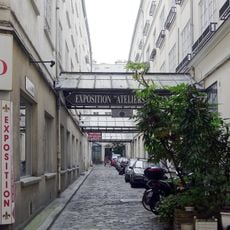
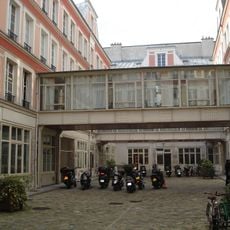
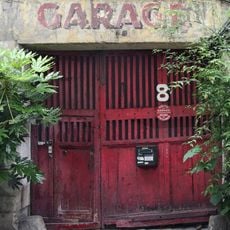
The name comes from the sign of an inn that once stood here, showing a golden hand. The passage belonged to the faubourg Saint-Antoine furniture district, and workshops survive in the cité Dupuy at no. 15: the Ateliers de la Main-d'Or, the Marcotte bronze workshops and the Charles Schmidt art bronze works. At no. 18 a bas-relief shows a cabinetmaker.
The passage is easily accessible on foot and is pedestrian-focused especially in its southern section, though vehicles can drive further north. Early mornings and evenings are quieter times, making it an unhurried place to walk through.
At number 15, the porch of the cité Dupuy, built in 1880, carries an inscription and a mascaron above a half-moon window that may depict Mercury, Roman god of commerce. The building permit was granted in 1878 to B. Dupuy, who lived in Brussels, and the architect was Léon Echard. The Théâtre de la Main d'Or shares the same address.
The community of curious travelers
AroundUs brings together thousands of curated places, local tips, and hidden gems, enriched daily by 93,712 contributors worldwide.