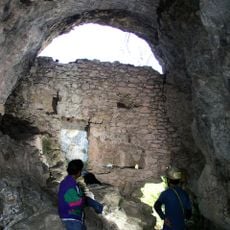
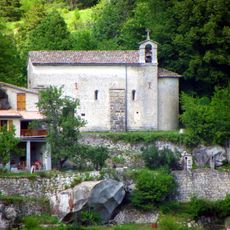
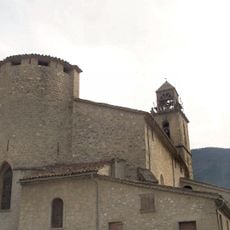
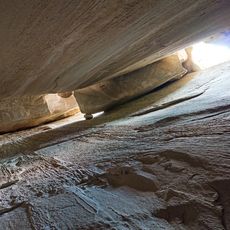
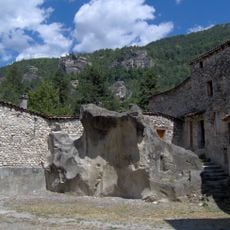
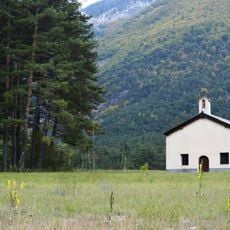
Grotte du Cul de Bœuf, Cave entrance in Méailles, France.
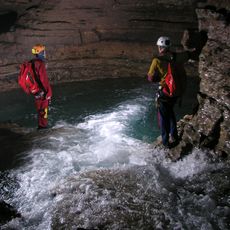
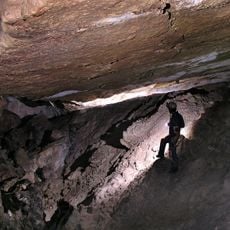
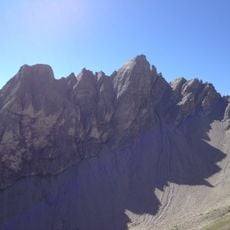
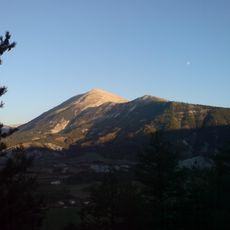
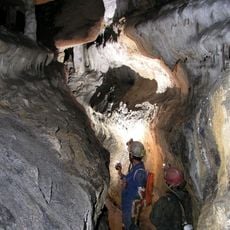
Grotte du Cul de Bœuf is a cave entrance on the slopes of Grand Coyer mountain where different geological layers meet. The cave system extends deep underground through multiple chambers and leads to an underground water body.
The cave was first documented in the 17th century when a scholar sent a physician to investigate the cold winds emerging from the mountain. Later archaeological expeditions discovered artifacts within its chambers.
The name comes from the cave's shape: Etienne Garcin wrote in 1835 that locals called the hollow "le cul-de-Bœuf" (ox's rump). In summer a small cold wind blows out of the entrance, probably convection in a descending, blind cavity that traps cold air. Pierre Gassendi and Peiresc linked such vents to the "source of the winds" of Mont Coyer.
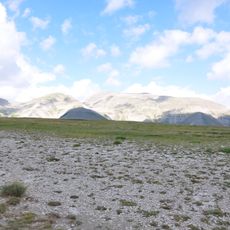
The cave lies on the slopes of Grand Coyer above Méailles, and its profile descends at a steady gradient to the water line called lac des Fées at -106 m, which is relatively easy to reach. The full drop is 131 m over 650 m of passages. From the entrance, the Vaïre valley and the village of Peyresq, less than 2 km away on the far bank, are visible.
The cold wind felt at the entrance in summer is probably convection: a descending, blind cavity like this one traps cold air, and the draught can vary at night when the outside temperature drops below that of the cave. This has led some to identify it with the "source of the winds" that Peiresc sent a physician to study on Mont Coyer in 1634.
The community of curious travelers
AroundUs brings together thousands of curated places, local tips, and hidden gems, enriched daily by 92,890 contributors worldwide.