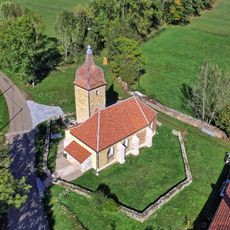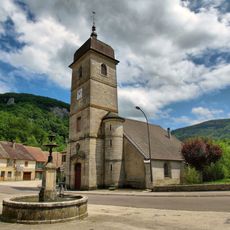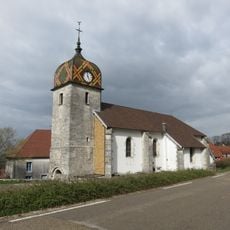
Château de Sainte-Anne, Medieval castle ruins in Sainte-Anne, France.
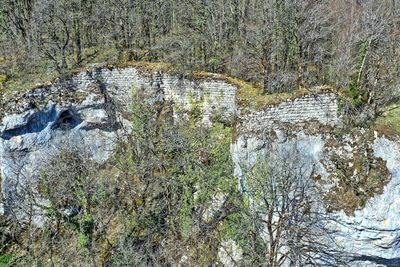
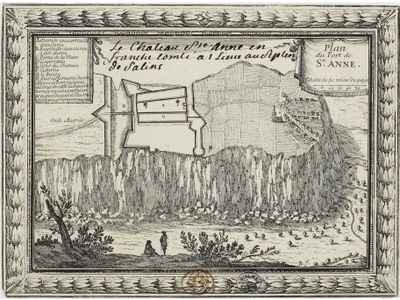
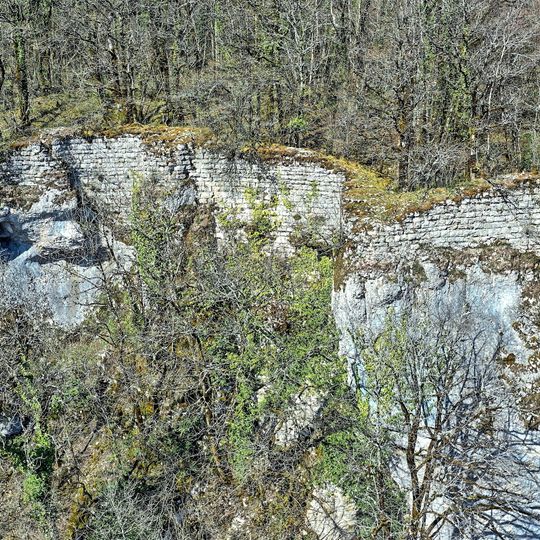
Château de Sainte-Anne sits on a limestone crag with natural cliff faces forming three sides of its defenses, while a moat cut into bedrock protected the perimeter. The surviving stone walls and foundations reveal how builders shaped a fortress that relied on both geological features and constructed barriers.
The fortress began in 1235 when Hughes de Rans built it as a fortified residence, then Jean I of Chalon expanded it into a major regional stronghold. Over time it became a key defensive center that shaped territorial control in the area.
The fortress shaped how the region was controlled and defended during medieval times, reflecting the strategies of local rulers. Its position on the rock shows how people used natural features to stay safe and maintain power in their territory.
A path climbs up to the ridge of the rocky plateau where you can examine the remaining walls and foundations. The site is fairly easy to reach on foot, though you need to watch your step on uneven stone surfaces.
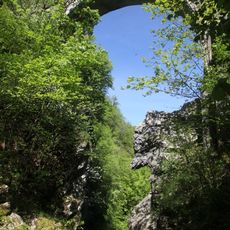
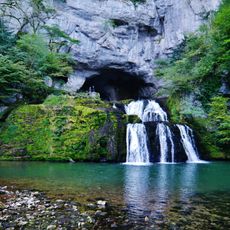
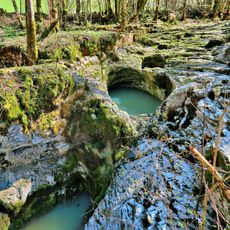
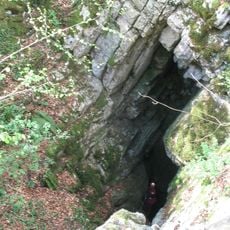
A hidden opening called the Coulou postern led down to a natural spring at the crag summit that never ran dry, ensuring the garrison always had water. This secret link to the spring was a clever solution to keep defenders supplied during long sieges.
The community of curious travelers
AroundUs brings together thousands of curated places, local tips, and hidden gems, enriched daily by 60,000 contributors worldwide.