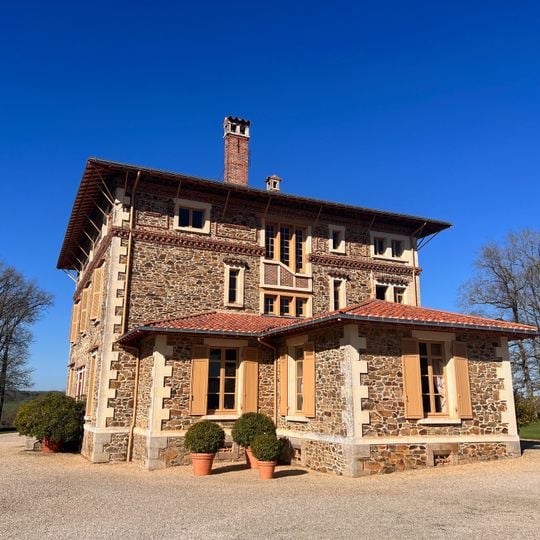
Château de l'Auneau, 19th century château in Chantonnay, France.
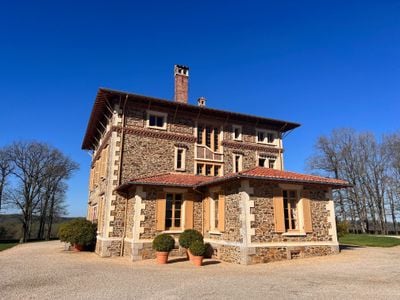
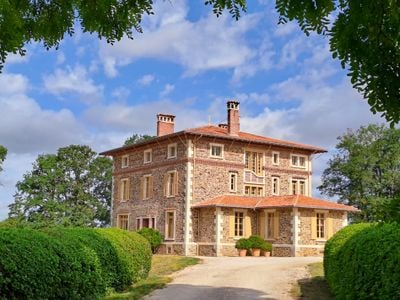
Château de l'Auneau is a late 19th-century square building designed by architect Joseph Libaudière as a Roman-style villa, with rooms arranged around a central staircase. A lower L-shaped wing, once the caretaker's lodging, precedes the main block. The south facade has three openings per floor and a central perron inscribed with the date 1899, flanked by the Bouquet and David coats of arms. The east facade, seen from the drive, mixes a door, eight windows and a stair-following bay.
Édouard Grimaux, a professor and friend of Georges Clemenceau, commissioned the château at the end of the 19th century from the Vendéen architect Joseph Libaudière, whose other works include the château de La Chesnelie and the château de La Mouhée. The date 1899 is carved above the central perron of the south facade. In 1947 Madame Édouard David bought the property from the Grimaux family, and it has belonged to the David family since.
Locals use the park as a walking destination, drawn to the mature trees that provide shade and visual interest throughout the seasons. The maintained paths guide visitors past different planted areas that reflect how gardens were conceived in the late 1800s.
The estate opens to visitors during special events like Heritage Days, while group or private visits can be arranged by contacting ahead. It is worth reaching out before planning your trip to confirm current opening conditions and understand any restrictions.
A 120-metre wall borders the former kitchen garden, and it is known as the "wall of roses"; the "cabanon" stands on the site of that old potager. The park also holds ornamental trees such as a cedar of Lebanon, an American walnut, an umbrella pine and a liquidambar.
The community of curious travelers
AroundUs brings together thousands of curated places, local tips, and hidden gems, enriched daily by 92,922 contributors worldwide.