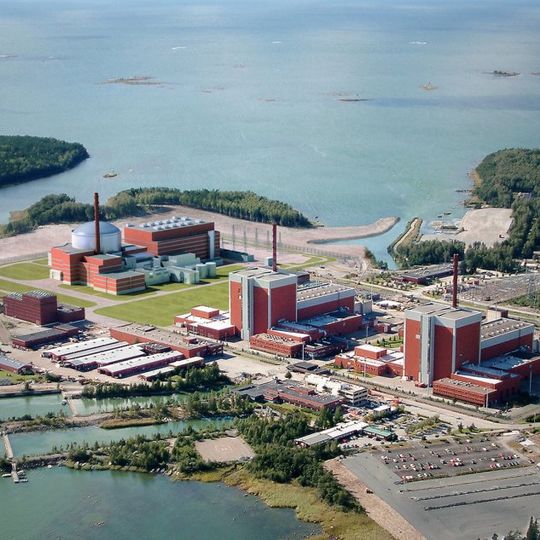
Olkiluoto Nuclear Power Plant, Nuclear power facility in Eurajoki, Finland.
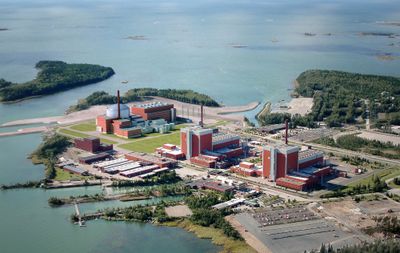
The facility consists of three reactors located on an island off the western coast of Finland, producing a large portion of Finnish electricity. The reactor buildings sit directly by the sea and are connected to the mainland through roads and supply lines.
The first reactor was started in 1974 and went online in 1979, the second followed in 1980, and the third after a long construction period in 2022. These development steps made Finland one of the major nuclear energy producers in Northern Europe.
The name comes from Finnish and refers to the natural island where the facility stands. Guided tours and information centers show visitors how the reactors operate and what safety systems are used.
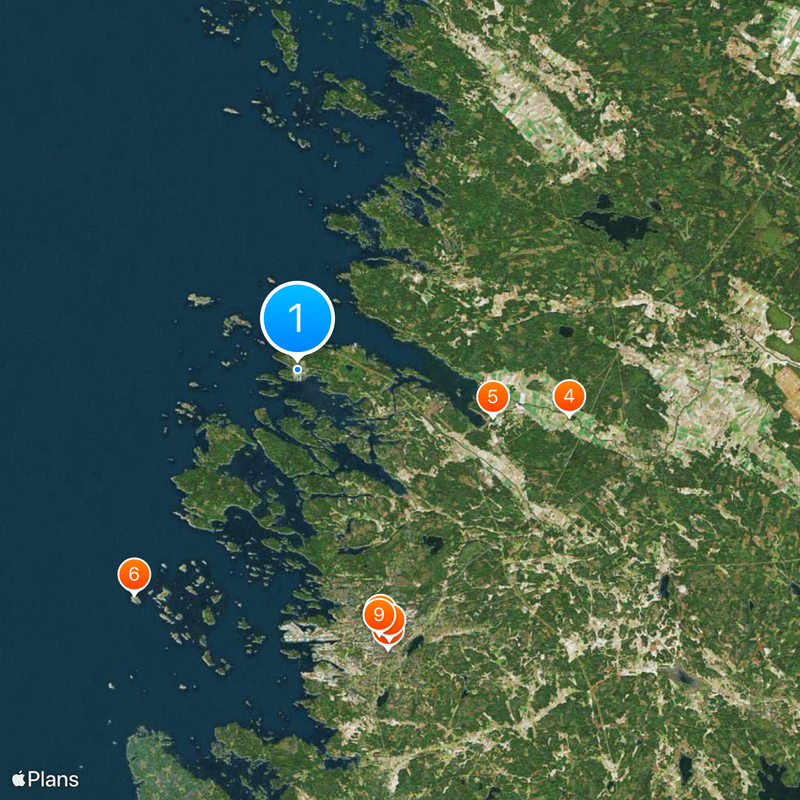
The site lies roughly 12 miles (20 kilometers) north of Rauma and can be reached by a road from the mainland. Visitors must register in advance for tours, as access to the site is controlled for security reasons.
The waste heat is used for the northernmost vineyard in the world, where Zilga grapes grow despite the cold climate. This vineyard shows how residual heat from energy production can be reused in unusual ways.
Location: Eurajoki
Inception: 1973
Website: https://tvo.fi/tuotanto/laitosyksikot.html
GPS coordinates: 61.23667,21.44222
Latest update: December 4, 2025 23:05
This collection brings together nuclear power plants that have shaped the history of civilian nuclear energy. Some experienced accidents that changed the world’s view of nuclear energy. Chernobyl in Ukraine remains a symbol of the 1986 disaster, while Fukushima in Japan showed the risks of natural events. Three Mile Island in Pennsylvania paused the building of new reactors in the US for many years. Other sites are among the largest in the world, like Kashiwazaki-Kariwa in Japan or Bruce in Canada. Many places are facing challenges today, such as the Zaporijia plant in Ukraine. The collection also includes projects that tried to push the technical limits of this energy. Superphénix in France and Monju in Japan explored new types of reactors, with mixed results. Some facilities, like Bataan in the Philippines, were never operational despite being fully built. Others, like Oyster Creek or Tokai, helped start nuclear work in their countries. From Siberia to the United Arab Emirates, from Canada to India, these sites tell stories about energy choices, technical progress, failures, and questions that have surrounded this source of power for more than sixty years.
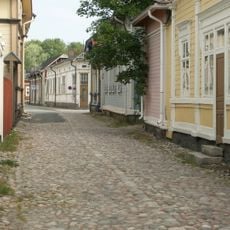
Old Rauma
12.8 km
Church of the Holy Cross
12.5 km
Vuojoki manor
12.5 km
Liinmaa Castle
9.2 km
Kylmäpihlaja lighthouse
12.7 km
Rauma water tower
13.4 km
Kordelin Chapel
13 km
Rauma Old Town Hall
12.7 km
Rauma Maritime Museum
11.9 km
Eurajoki Church
16 km
Lapijoki Bridge
13.2 km
Rauma old train station
11.9 km
Lönnström Art Museum
10.9 km
Marela
12.7 km
Rauma Museum
12.7 km
Ruins of the Holy Trinity Church
12.9 km
Rauma Art Museum
12.7 km
Teresia and Rafael Lönnström Home Museum
10.9 km
Poselli
12.4 km
Rauma Maritime Museum
12.3 km
Kuivalahden rukoushuone
8.8 km
Jardín Botánico de Rauma
12.1 km
Luvia cemetery chapel
16.9 km
Eurajoen apteekkimuseo
17 km
Luvia Homestead Museum
16.9 km
Kotiseutumuseo Muina
18.3 km
Tower in Rauma seminar
12 km
House in Rauma seminar
12.1 kmReviews
Visited this place? Tap the stars to rate it and share your experience / photos with the community! Try now! You can cancel it anytime.
Discover hidden gems everywhere you go!
From secret cafés to breathtaking viewpoints, skip the crowded tourist spots and find places that match your style. Our app makes it easy with voice search, smart filtering, route optimization, and insider tips from travelers worldwide. Download now for the complete mobile experience.
A unique approach to discovering new places❞
— Le Figaro
All the places worth exploring❞
— France Info
A tailor-made excursion in just a few clicks❞
— 20 Minutes