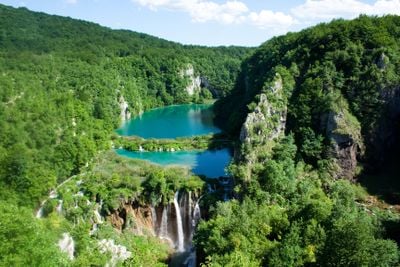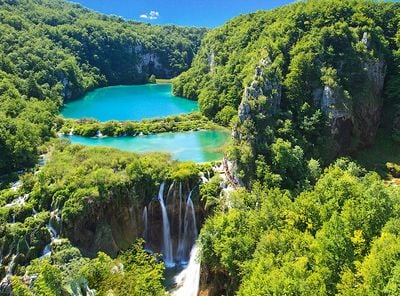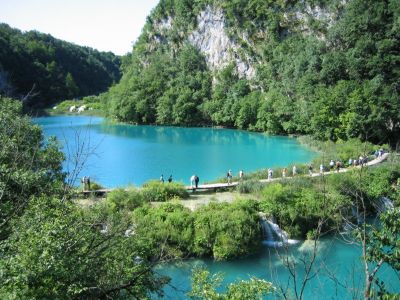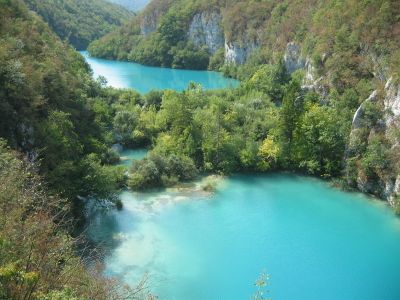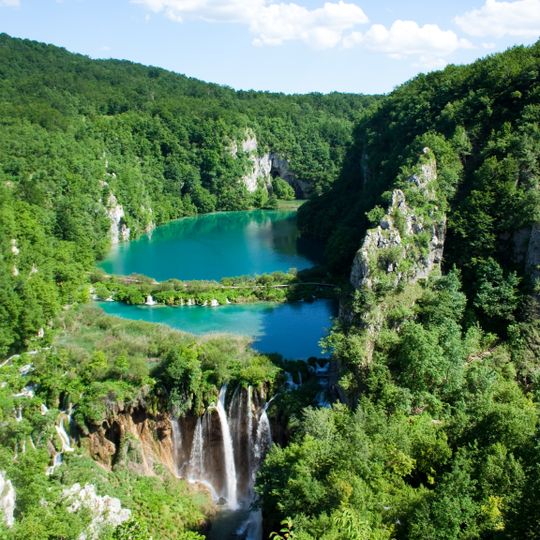
Plitvice Lakes National Park

Log in to your account

AroundUs is a community-driven map of interesting places, built by curious explorers like you. It grows with every review, story, and photo you share.
Connect to save your favorite spots, contribute locations, and create personalized routes.
By continuing, you accept our Terms and Conditions and our Privacy Policy
Add to collection
Map
Suggest a change
Share

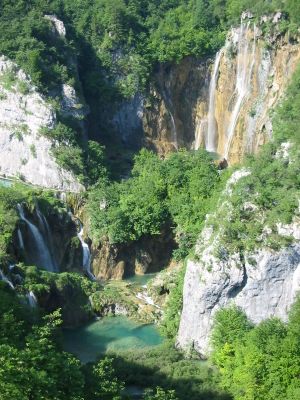
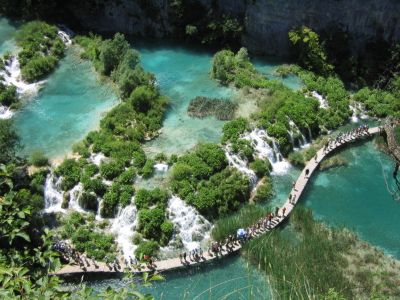
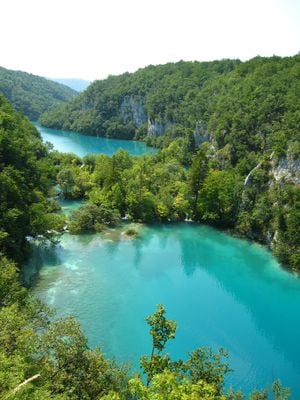
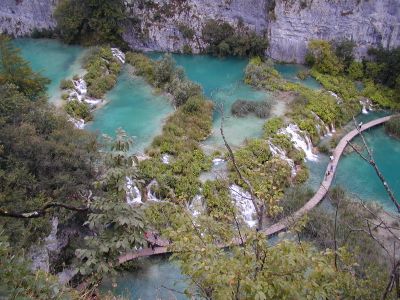
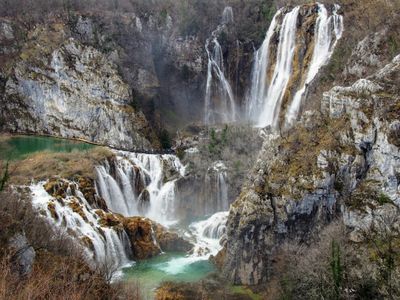
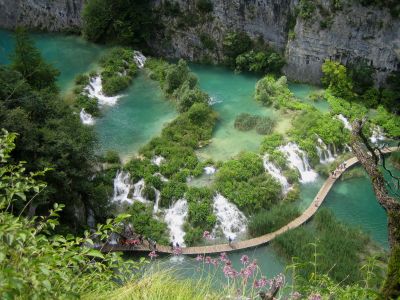
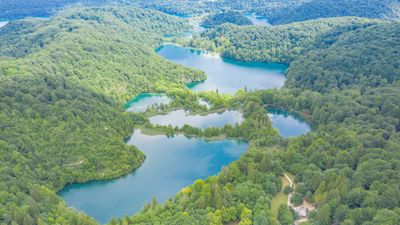
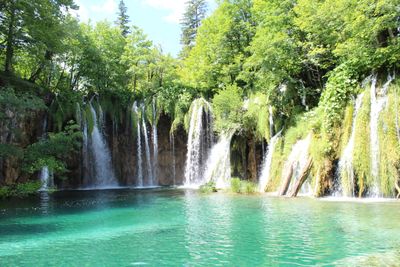
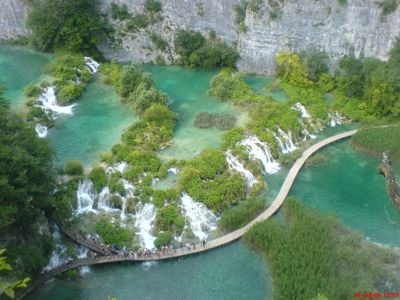
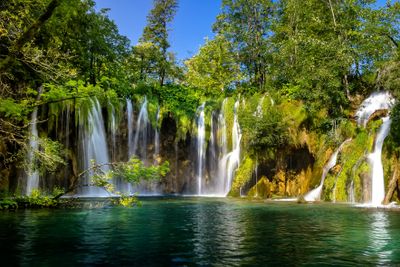
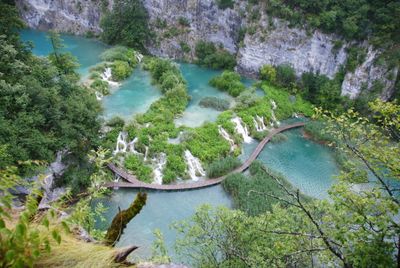
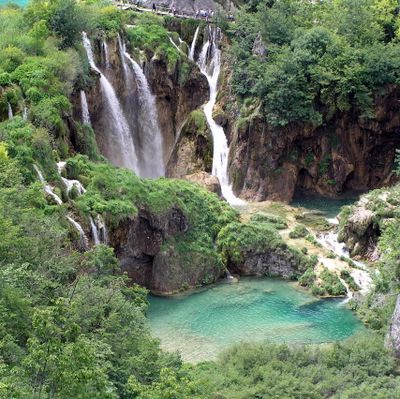
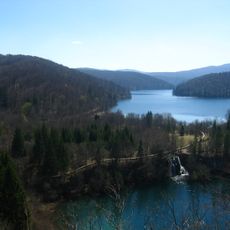
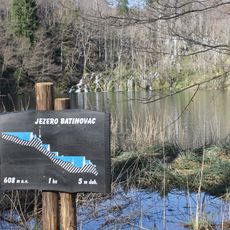
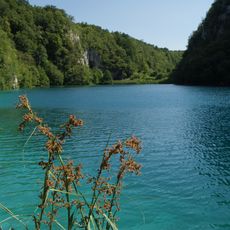
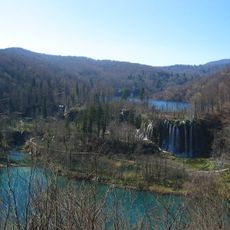
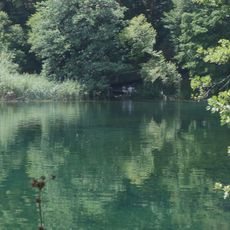
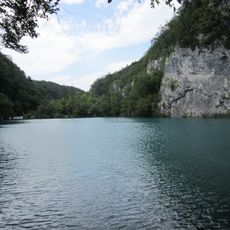
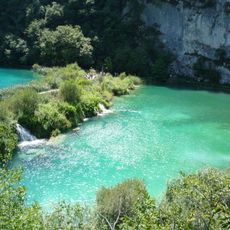
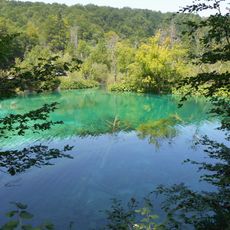
Plitvice Lakes National Park, National park with 16 lakes in Karlovac and Lika-Senj counties, Croatia

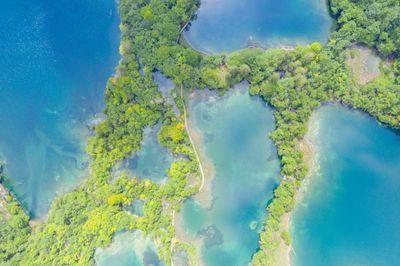
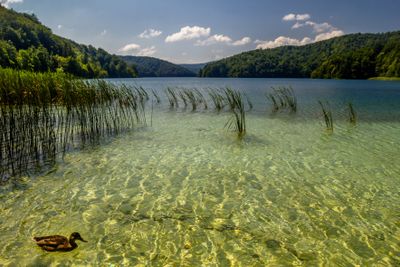
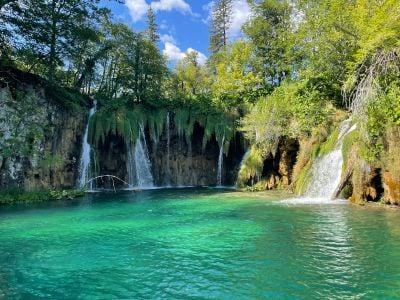
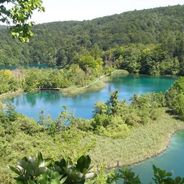
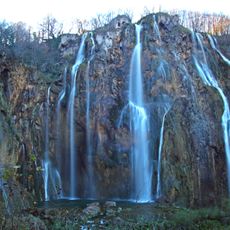
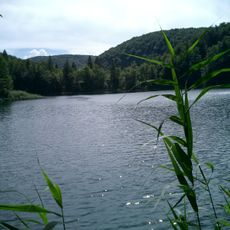
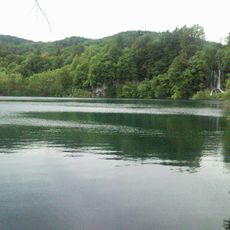
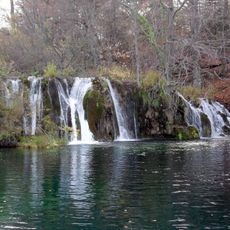
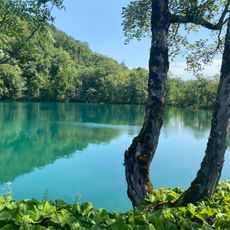
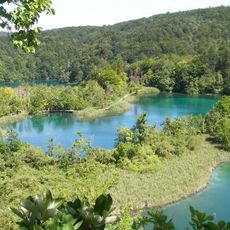
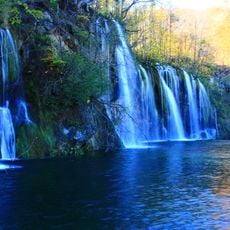
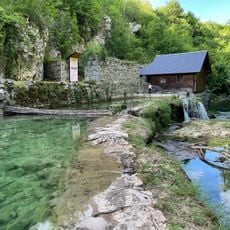
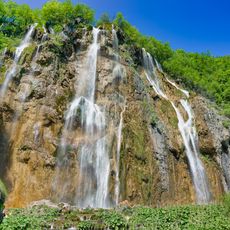
The national park contains a system of limestone lakes connected by 92 waterfalls, creating a network of water formations across 30,000 hectares.

The area received national park status in 1949 under Yugoslav administration and later gained UNESCO World Heritage recognition in 1979 for its natural characteristics.

Local folklore connects each lake to specific tales, including stories about shepherds, grandmothers, and historical events that shaped regional traditions.

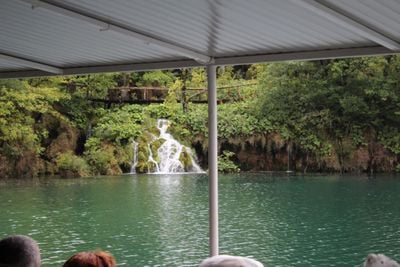
Visitors can explore the park through seven marked routes that include wooden walkways, electric boat rides, and panoramic train transportation across different sections.

The lakes feature a geological process where moss transforms calcium carbonate deposits into travertine rock, continuously modifying the landscape over time.

Location: Karlovac County

Location: Lika-Senj County

Inception: April 8, 1949

Address: Croatia

Opening Hours: Monday-Sunday 07:00-16:00

Phone: +38553751015

Website: https://np-plitvicka-jezera.hr

GPS coordinates: 44.88045,15.61604

Latest update: August 19, 2025 10:33

Geological formations: rock structures, caves, thermal springs

This collection presents geological formations created through natural processes over millions of years. From layered sandstone waves in Arizona to volcanic basalt columns in Northern Ireland, these locations demonstrate Earth's geological diversity. Erosion, tectonic activity, and mineral deposits have shaped landscapes that provide insights into our planet's history. The selection includes limestone caves in New Zealand with glowworms, thermal springs in Turkey with travertine terraces, and colored rock formations in China created by iron-rich minerals. Visitors will find glacier caves in Iceland, canyons in Utah, and salt pans in Namibia. Each location documents specific geological processes and offers opportunities to explore different rock formations and natural phenomena.

The most beautiful waterfalls and cascades in the world

Waterfalls have a way of drawing people in. The sound of falling water, the mist that rises from the base, the way light catches the spray. Some of the most striking examples sit in places that remain relatively quiet, where the journey itself becomes part of the experience. These destinations reward travelers who make the effort, offering moments of solitude that are increasingly rare around natural landmarks. This collection includes places like the limestone terraces of Plitvice Lakes in Croatia, where a chain of interconnected pools spills from one to the next through forest shade. Or the red sandstone walls of Coyote Gulch in Utah, where water carved out hidden alcoves and pools over countless seasons. In India, Nohkalikai Falls drops from a forested plateau into a green pool far below. China's Huangguoshu Waterfall has a cave tucked behind the curtain of water itself. At the Vietnam-China border, Ban Gioc-Detian spreads wide across the landscape, while Angel Falls in Venezuela tumbles nearly a thousand meters from a flat topped mountain. Norway's Geirangerfjord hosts the Seven Sisters, a cluster of parallel streams that flow straight into the fjord. Iceland's Dettifoss sends an immense volume of glacial water over black volcanic rock. South Africa's Tugela Falls descends in stages from the dramatic cliff face of the Drakensberg range. And in the Philippines, Kawasan Falls creates a series of turquoise pools beneath a canopy of tropical growth. Each place has its own character, shaped by the rock, the climate, and the surrounding terrain.

The most impressive viewpoints in the world

From the highest peaks to coastal cliffs, this collection brings together geographically significant observation points across all continents. The locations offer views of mountain ranges, waterfalls, deserts, oceans, and notable architectural structures. The selection includes the Great Wall near Beijing, the Cliffs of Moher above the Atlantic, the Grand Canyon in Arizona, and Mount Everest on the Nepal-Tibet border. Among the waterfalls are Iguazú Falls between Brazil and Argentina, Victoria Falls between Zambia and Zimbabwe, and Niagara Falls between Canada and the United States. The Pyramids of Giza, the Alhambra in Granada, and the Taj Mahal in Agra showcase important architectural achievements from different eras. Natural formations such as Uluru in the Australian outback, Halong Bay in Vietnam, Banff National Park in the Canadian Rockies, and the Norwegian fjords demonstrate Earth's geological diversity. Additional locations include Santorini in the Aegean Sea, the Amazon rainforest, Horseshoe Bend on the Colorado River, Petra in Jordan, Mount Kilimanjaro in Tanzania, the Fitz Roy range in Patagonia, and Plitvice Lakes National Park in Croatia.

European lakes off the beaten path: Alps, Scotland, Iceland

Europe contains numerous lakes distinguished by their natural beauty and relative seclusion. From the turquoise waters of the Dolomites to the clear lakes of the Scottish Highlands, these locations span various geological formations. These lakes lie within alpine regions, volcanic areas, or historic cultural landscapes. In the Alps, lakes such as Lake Bohinj in Slovenia, Königssee in Bavaria, and Lake Brienz in the Bernese Oberland can be found. Hintersee near Ramsau and Seealpsee in Appenzell Innerrhoden sit in mountain valleys. In Southern Europe, Lake Scanno in Abruzzo and Lake Sorapis in the Dolomites are located. Hallstätter See in Upper Austria lies between steep mountain slopes. Other lakes exist in volcanic or glacially formed landscapes. Kerið crater lake in southern Iceland demonstrates volcanic activity. In Scotland, Loch Awe extends through the valleys of Argyll, while the Fairy Pools on the Isle of Skye flow in rock basins. Lake Saimaa in southeastern Finland forms part of an extensive lake district. These bodies of water illustrate the geological and landscape diversity of Europe.

Rivers and lakes for swimming in Croatia

Collection of the main waterways and bodies of water in Croatia where swimming is permitted and possible, including rivers such as the Cetina, Krka, Sava, and lakes such as Vransko jezero, Jarun, and Modro jezero. These natural sites offer clean and safe waters for swimming during the summer season.

Reviews

Visited this place? Tap the stars to rate it and share your experience / photos with the community! Try now! You can cancel it anytime.

« Plitvice Lakes National Park - National park with 16 lakes in Karlovac and Lika-Senj counties, Croatia » is provided by Around Us (aroundus.com). Images and texts are derived from Wikimedia project under a Creative Commons license. You are allowed to copy, distribute, and modify copies of this page, under the conditions set by the license, as long as this note is clearly visible.

Discover hidden gems everywhere you go!

From secret cafés to breathtaking viewpoints, skip the crowded tourist spots and find places that match your style. Our app makes it easy with voice search, smart filtering, route optimization, and insider tips from travelers worldwide. Download now for the complete mobile experience.
Around Us App Screenshot

A unique approach to discovering new places

Le Figaro

All the places worth exploring

France Info

A tailor-made excursion in just a few clicks

20 Minutes