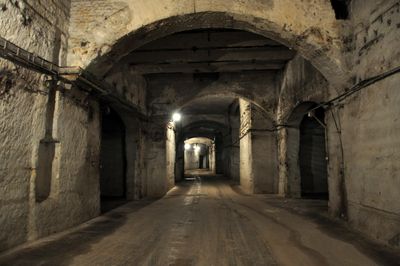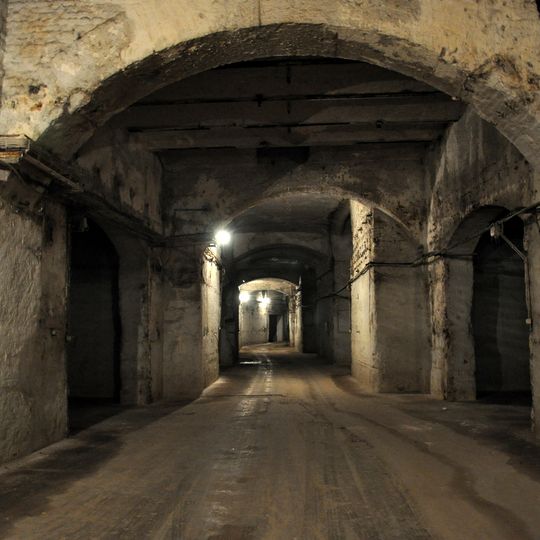
Kőbánya cellar system, Underground cave system in Kőbánya district, Hungary
The Kőbánya cellar system is a network of underground corridors and halls cut into Sarmatian limestone beneath Budapest's 10th district. Most passages are 4–6 m wide and high, with some branches 10–12 m wide and 8–10 m high; the deepest point lies about 30 m below the surface. The layout is mostly comb-like, with dead-end branches off a main corridor, and the rock is damp, with some sections flooded by groundwater.
Limestone quarrying began in medieval times and shaped Budapest's development as the stone built the city's landmarks. During World War II, the caves were repurposed as a manufacturing facility, changing their role entirely for military purposes.
Local people recognize these underground spaces as a vital part of their city's story, since the extracted limestone built famous structures like the Chain Bridge and Fisherman's Bastion. This site shows how closely the city's life has been tied to what lies beneath.
The complex is only open on guided group tours, free of charge, held around the weekend nearest 27 June during the Saint László Days and on a September date announced for the European Heritage Days; tours also take in the Havas (Dreher) Villa. Parts of the passages are flooded by groundwater and the limestone keeps the air moist, so waterproof footwear helps. The historic main entrance can still be seen beside the Dreher Breweries.
After quarrying ended, the caves became wine storage cellars and later mushroom farms, showing how flexible their use became over time. Today, sections serve purposes ranging from diving training to other recreational activities.
The community of curious travelers
AroundUs brings together thousands of curated places, local tips, and hidden gems, enriched daily by 92,632 contributors worldwide.