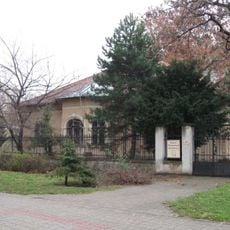
Conti Chapel in Budapest 10, Chapel in Hungary
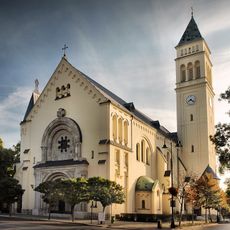
Conti Chapel in Budapest 10 is a Baroque chapel with a gate tower topped by a square stone helmet, its sanctuary facing east. A richly decorated cornice runs along the roofline, and the facade bears a Rococo coat of arms with the monogram of Mary. Inside is a gilded altar with twisted columns; the altarpiece is a copy of the Madonna of Innsbruck, and the sculptures were made by Antal Lipót Conti.
Antal Lipót Conti, an Italian-born master stonemason, and his wife Krisztina Drenker built the chapel in 1739–1740 as a votive offering for surviving the plague. Joseph II's 1786 decree ordered it demolished with other votive chapels, but family connections saved it; worship resumed in 1802. It served as Kőbánya's parish church from 1881 to 1899, was renovated in 1938, damaged in World War II and restored in 1947.
The chapel is named after its builder, the Italian-born stonemason Antal Lipót Conti, who carved its statues himself. Since 1802 it has again served worshippers, and from 1881 to 1899 it was the parish church of Kőbánya. Today it belongs to the Greek Catholic parish of Rózsák tere, and a wooden crucifix with a tin corpus, set up in 1879, stands in front of it.
The chapel stands in Óhegy, in Budapest's 10th district, and belongs today to the Greek Catholic parish of Rózsák tere. Its sanctuary faces east, and a wooden crucifix with a tin corpus, set up in 1879, stands in front of the entrance. The gate tower carries a square stone helmet, so look for that when approaching from the street.
The building was constructed as gratitude for surviving a plague epidemic and connects personal survival with religious testimony. This rare example of a private chapel from the 18th century shows how individual people expressed their beliefs through architecture.
The community of curious travelers
AroundUs brings together thousands of curated places, local tips, and hidden gems, enriched daily by 92,632 contributors worldwide.