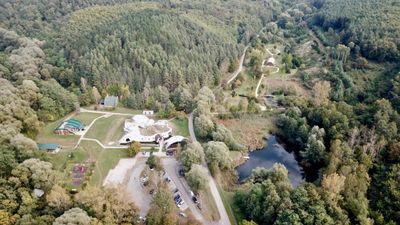
Ipolytarnóc Fossils Protected Area, Paleontological site in Nógrád County, Hungary.
The Ipolytarnóc Fossils Protected Area is a paleontological site containing thousands of preserved animal footprints, shark teeth, and plant remains embedded in layers of volcanic rock. The fossils are arranged across different geological layers showing how life existed approximately 17 million years ago.
Scientific study of the fossil deposits started in 1836 and eventually led to official protection of the area in 1944. This long period of research transformed the location into an important center for understanding ancient life.
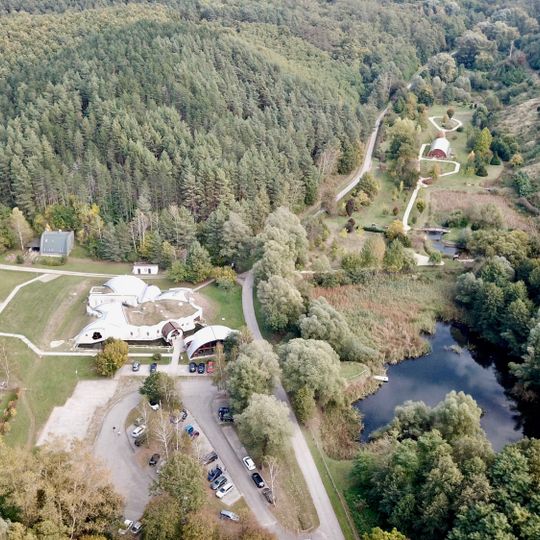
The site has held the Council of Europe's European Diploma since 1995, renewed in 2010 until 2020, one of three Hungarian areas with the award. It lies in the Novohrad–Nógrád Geopark, created in 2008 as the world's first cross-border geopark, joining the European and Global Geopark networks in 2010. Trails include the 700 m Rock Park Trail, marked by stones every 2 million years, and the 4 km Kőszikla Trail past abandoned quarries.
The site is accessible to visitors through marked walking trails with an information center in the village of Ipolytarnóc. Wear sturdy shoes and allow time to explore the different fossil levels at a comfortable pace.
The petrified pine trunk found in the Borókás stream bank measures 8 metres in girth and nearly 100 metres in length; it belongs to Pinuxylon tarnocziense, the largest known petrified pine in the world. Its silica petrification came from volcanic solutions seeping through the layers. The site also holds more than 15,000 leaf impressions of ferns, palms, laurels, magnolias and plane trees.
The community of curious travelers
AroundUs brings together thousands of curated places, local tips, and hidden gems, enriched daily by 93,140 contributors worldwide.