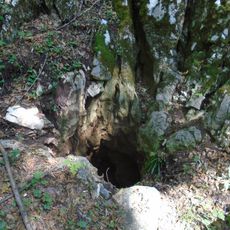
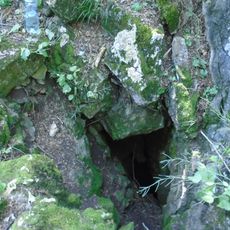
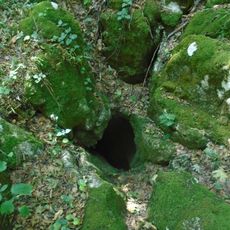
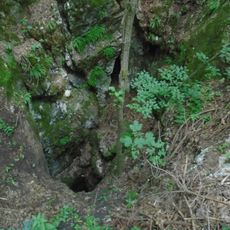
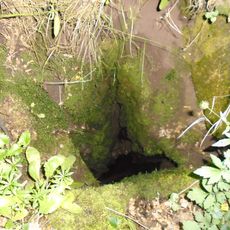
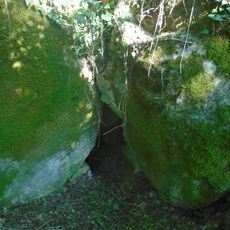
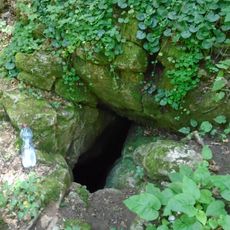
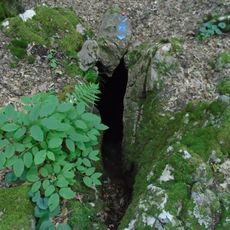
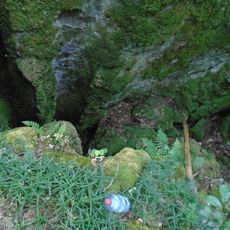
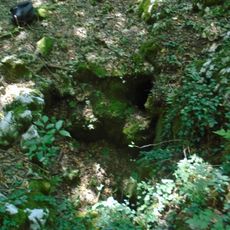
Vecsembükk Pothole, Natural cave in Bódvaszilas, Hungary
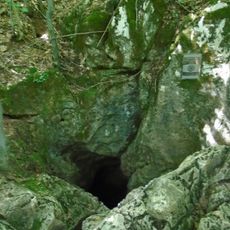
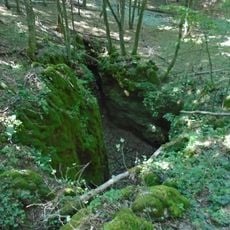
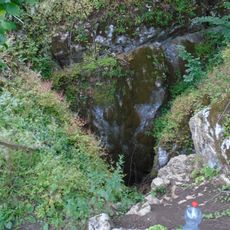
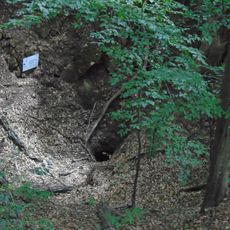
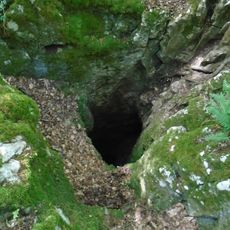
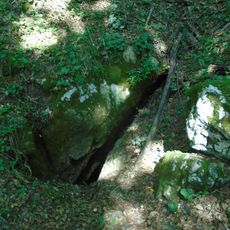
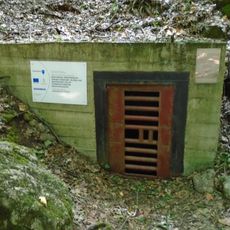
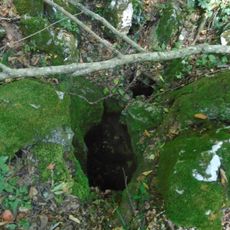
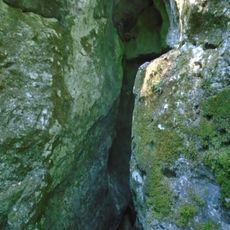
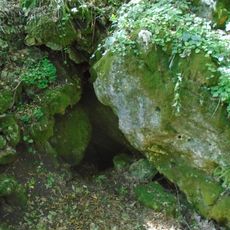
The Vecsembükk Pothole is an open shaft cave in Triassic limestone on the Alsó-hegy Plateau, with a fenced 4–5 m wide entrance at 522 m above sea level. Its parallel vertical shafts, 3–10 m wide and often widening downward, are separated by narrowings and clayey debris, all within a surface area of 31×21 m. The 83 m deep 90-es shaft is Hungary's deepest continuous cave shaft; other shafts include Bejárati (65 m), Oldal (60 m) and Hideg-álom (53 m).
Jordán Viktor reached only about 35 m during the 1911 expedition led by Jordán Károly. On 14 April 1927 Kessler Hubert, helped by Beliczay András, Frank István and Kiss Gyula, descended to 91 m; Kiss drew the long-section map published that year. In 1960 Kósa Attila, Nyári Tamás and Rónai Miklós surveyed the cave, producing a plan and cross-sections.
The pothole appears in speleological literature under many names, among them Pongrác 5. sz. zsombolya, V-24 and Vecsembükk Shaft. Research here led Sárváry István and Müller Pál to reject Kessler Hubert's mechanical theory and explain the shaft's origin by pure corrosion in Wetterstein limestone.
Access requires specialized climbing gear and technical skills for descending safely through the vertical sections. Registration with local cave experts is necessary to navigate the complex passages properly.
The cave's deepest point is sealed by a clay plug whose gamma activity, measured by Gádoros Miklós in 1974, points to volcanic origin. Quartz pebbles and metamorphic grains found around the shaft also suggest a former paleokarst surface covered by volcanic material.
The community of curious travelers
AroundUs brings together thousands of curated places, local tips, and hidden gems, enriched daily by 93,183 contributors worldwide.