Synagogue in Kőszeg, 19th-century synagogue in Kőszeg, Hungary
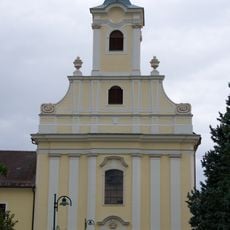
The Kőszeg Synagogue is a Neo-Gothic building constructed in 1858–1859, measuring 30.6 by 12.8 metres. Its flat dome is painted in Baroque style, and the inscription 'in honour of God, built by Philip Schey von Koromla' names the donor. The complex also includes a mikveh, the Talmud Torah school, the rabbi's residence and outbuildings.
Philipp Schey von Koromla, a wholesaler ennobled in 1859 and made a baron in 1869, funded the building from a foundation; construction began in 1858 and it was consecrated on 24 December 1859. The community was dissolved in 1951, and the building stood empty and decaying, state-owned from 1944 to 1996, until renovation ran from October 2020 to its reopening on 25 August 2022.
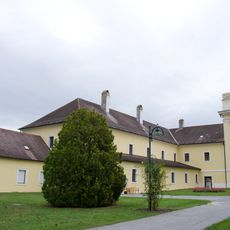
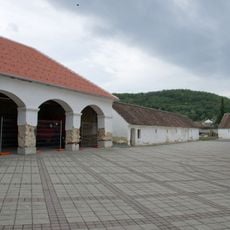
The building was donated by Philipp Schey von Koromla, whose name appears above the entrance beneath the Tablets of the Law, and a dome inscription reads "in honour of God built by Philip Schey von Koromla". The complex also held the Talmud Torah school, the rabbi's apartment and a mikveh; the former school now serves as a furniture and household goods shop.
The complex is run by the Sorstalanság foundation, named after Imre Kertész's novel Fatelessness; a small museum occupies the former rabbi's apartment. The former Talmud-Tora school now operates as a shop selling furniture and household goods, so parts of the site are in commercial use. The building was reopened on 25 August 2022 after renovation begun in October 2020.
The building is 30.6 by 12.8 metres, and the dome interior was painted in Baroque style. An inscription in the dome names the donor: "built in honour of God by Philip Schey von Koromla", whose name also appears above the entrance beneath the Tablets of the Law. The former Talmud Torah school next door now serves as a shop selling furniture and household goods.
The community of curious travelers
AroundUs brings together thousands of curated places, local tips, and hidden gems, enriched daily by 93,147 contributors worldwide.