Remete-völgyi Upper Cave, Natural cave system in Buda Hills, Hungary
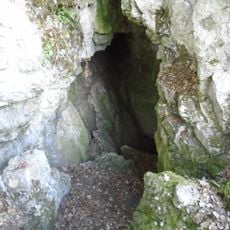
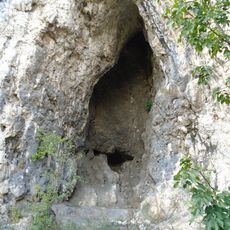
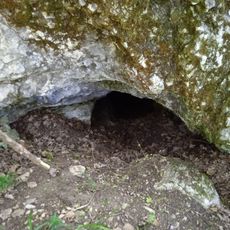
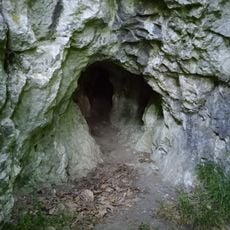
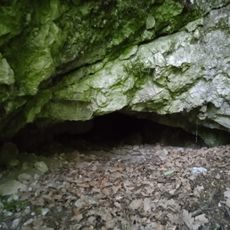
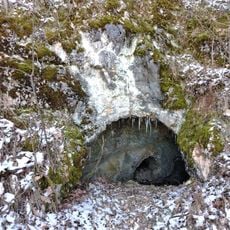
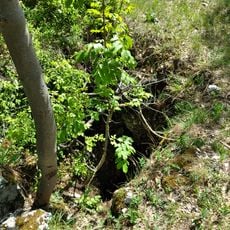
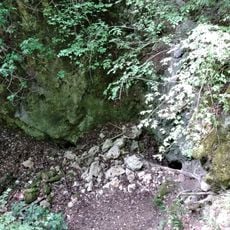
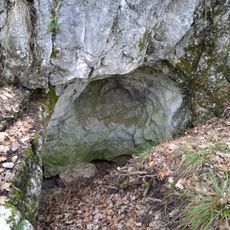
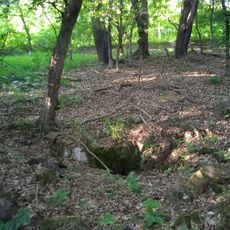
Remete-völgyi Upper Cave is a 29.3-metre-long cave formed in Upper Triassic Dachstein limestone in the Remete Gorge, at about 340–350 m above sea level. Its entrance, facing southwest and measuring 2.2 m wide by 1.7 m high, is reached by a narrow rocky path from Remete Cave. Inside, a single straight passage leads to a small chamber.
Lóczy Lajos donated the first finds to the Hungarian National Museum in 1877: a lower jaw, two bones and three potsherds from a rock hollow near Remetemária. Gábori Miklós visited the cave in 1948, and Gáboriné Csánk Vera later classified its Copper Age sherds as Bodrogkeresztúr culture. Excavations also brought out a 62-piece Koszider bronze hoard with diadems, axes, gold hair-rings and amber beads.
The cave's name appears in print only from 1989, when it was first called Remete-völgyi Felső-barlang; earlier papers list it as Felső-barlang, Felsőbarlang or Remete-hegyi 6. sz. barlang. Excavations by Gáboriné Csánk Vera assigned the Copper Age pottery fragments to the Bodrogkeresztúr culture, and the Bronze Age hoard of 62 objects to the Koszider culture.
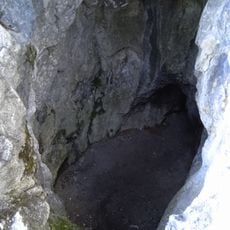
The cave is not gated and can be entered without a permit using basic caving equipment, but homeless people sometimes stay inside. Reach the entrance from the Remete Cave by a narrow, rocky path heading northeast; the opening faces southwest and is about 2.2 m wide and 1.7 m high. The passage is straight and easy to walk, widening into a small chamber at the end.
The cave lies on the middle cave level of the Remete Gorge, about 70 m above the valley floor at 340–350 m elevation, the same level as the Remete-hegyi-kőfülke rock shelter. Its ceiling is close to the surface, and the passage runs 29.3 m long with a floor area of 77 m² and a volume of 129 m³, measured in 1970.
The community of curious travelers
AroundUs brings together thousands of curated places, local tips, and hidden gems, enriched daily by 94,161 contributors worldwide.