Casement Aerodrome, airport
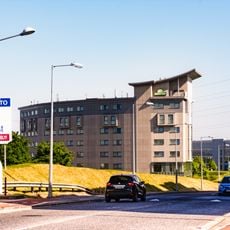
Casement Aerodrome is a military airfield in Baldonnel, southwest of Dublin, serving as the main base for the Irish Air Corps. The facility features wide runways, functional hangars, and administrative buildings arranged for flight training and military operations.
The aerodrome was established in 1917 during World War I to train pilots for the Royal Flying Corps. After Irish independence in 1922, control transferred to Ireland's air service, and the base became the starting point for notable transatlantic flights, including the Bremen's 1928 east-west crossing.
The aerodrome takes its name from Roger Casement, an Irish nationalist who fought for independence and was executed in 1916. This connection links the airfield to Ireland's struggle for self-determination and makes it a symbol of the nation's identity.
The airfield is difficult to access from outside as it is an active military installation with restricted public entry. Visitors may explore the grounds during occasional open days when the air force presents aircraft and facilities for public viewing.
The Bremen aircraft took off from here in 1928 on one of the earliest successful east-west transatlantic crossings, with Baron Hünefeld and Hermann Köhl aboard. Douglas Corrigan also departed from this base in 1938 for his famous Atlantic flight, deliberately flying in the wrong direction.
The community of curious travelers
AroundUs brings together thousands of curated places, local tips, and hidden gems, enriched daily by 92,842 contributors worldwide.