Bargy Castle, Norman fortress in County Wexford, Ireland
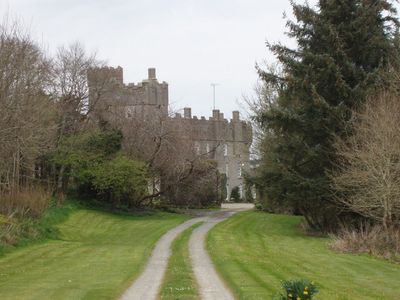
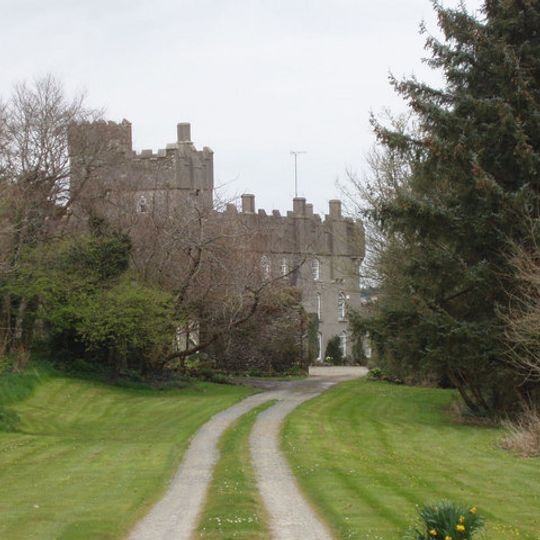
Bargy Castle is a Norman fortress near Tomhaggard in County Wexford, built around a square keep to which two wings were added at right angles in the fifteenth and seventeenth centuries. The keep has been renovated several times and is in good condition. Rough grey stone walls, narrow windows, a round turret and chimneys rise behind bare trees and evergreen shrubs.
The castle originated during the Norman conquest of Ireland and was later controlled by the Rossiter family. Following its seizure by Cromwell in 1667, it changed hands several times before eventually passing to the Harvey family.
The castle holds a connection to the 1798 Wexford Rebellion through Beauchamp Bagenal Harvey, who commanded the Wexford insurgents during this period.
The castle stands at the end of a curving gravel driveway, reached from the road near Tomhaggard, about 12 km south-west of Wexford town. The building is a private residence run as a hotel, so arrange any visit in advance rather than arriving unannounced. Bare trees and evergreen shrubs partly screen the lower storeys from the drive.
On 18 December 1960, three weeks after the Davison family moved in, Chris de Burgh and his older brother Richard found sticks of gelignite and gunpowder in a secret passage in one of the towers. Their father dated the gelignite to Glasgow, 1880, by its wrapper. The castle appears on the back cover of Chris de Burgh's 1974 debut album.
The community of curious travelers
AroundUs brings together thousands of curated places, local tips, and hidden gems, enriched daily by 92,634 contributors worldwide.