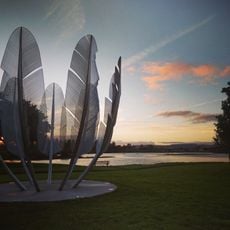
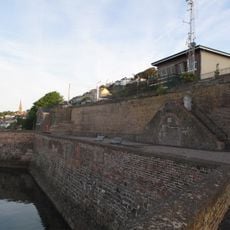
Cloyne Cathedral, Anglican cathedral in County Cork, Ireland
Cloyne Cathedral is a cruciform stone building whose 13th-century core dates from between 1250 and the 1270s. The south transept has Early English Gothic arched windows, while other windows follow the Decorated Gothic style; stained glass includes a window depicting Saint Colmán. A round tower stands across the road.
A monastery founded in 560 by Colmán of Cloyne on land given by Coirpre Cromm mac Crimthainn, King of Munster, stands at its origin; Vikings plundered the site in 822, 824 and 885, and the 885 raid killed the abbot and prior. The present church was built between 1250 and the 1270s, was damaged in the 1641 Rebellion and repaired in 1642, and was reroofed around 1705-06. A hurricane on Shrove Tuesday 1781 shattered 88 panes of glass and took slaters 11 days and 1,200 slates to repair.
The name Cloyne comes from the Irish Cluain Uamha, "Meadow of the Caves". The cathedral is now one of three cathedrals of the United Dioceses of Cork, Cloyne and Ross, in the ecclesiastical province of Dublin. A building in the grounds called the "Fire House" may have housed a female order keeping a fire burning continuously.
The cathedral stands in Cloyne village, County Cork, with the round tower directly across the road; the two are usually seen together on foot. The building is a working Church of Ireland church, so visits fit around services. The 13th-century nave and choir, the south transept windows and Brinkley's memorial are inside.
Mary Smyth died in 1675 and was buried beneath the nave floor; a horseshoe, the farrier's symbol, is carved into the ground above her. Local superstition calls it the "devil's footprint", claiming Satan left it there. Look for it in the nave paving.
The community of curious travelers
AroundUs brings together thousands of curated places, local tips, and hidden gems, enriched daily by 94,328 contributors worldwide.