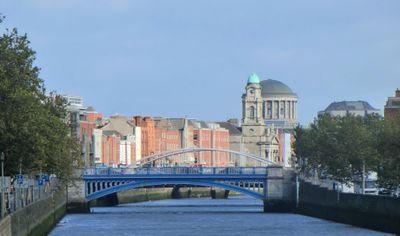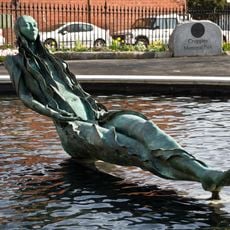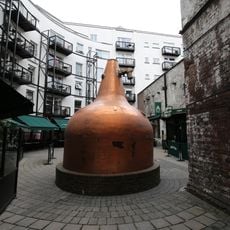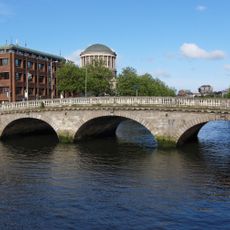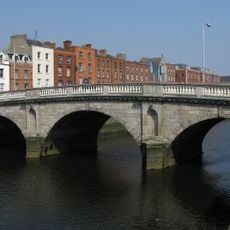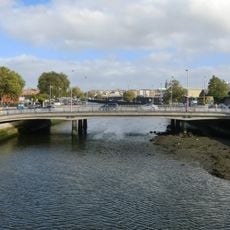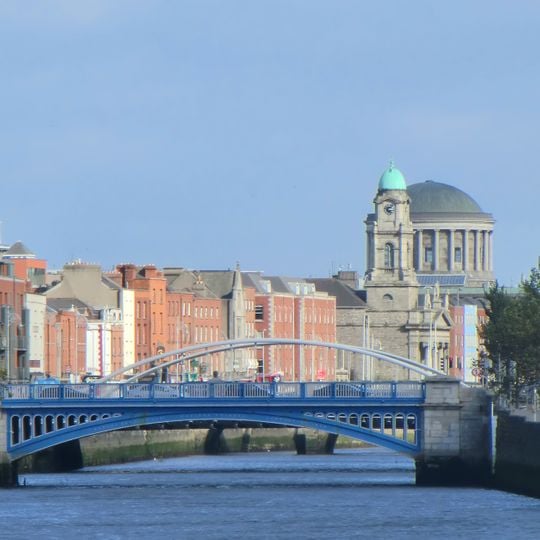
Rory O'More Bridge, Cast iron bridge in central Dublin, Ireland.
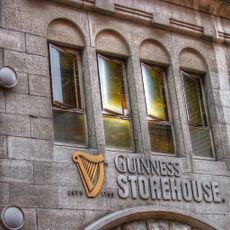
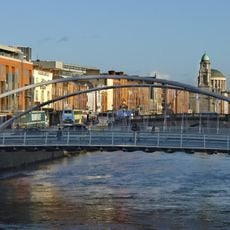
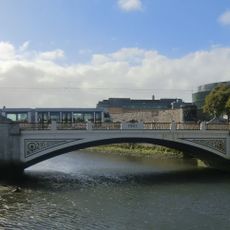
Rory O'More Bridge is a cast iron structure that crosses the River Liffey in central Dublin, linking Watling Street near the Guinness grounds to Ellis Street on the north quays. The bridge spans approximately 29 meters with a width of about 10 meters and features a single arch design.
The structure was built in 1859 from cast iron, replacing an older stone bridge at the same location. Originally called Victoria & Albert Bridge when it opened, it received its current name during the 1930s.
The bridge is named after Rory O'More, a significant figure in the Irish Rebellion of 1641. His name connects this crossing with a formative moment in Irish history.
The bridge functions as a public crossing over the Liffey with direct access to both riverbanks in central Dublin. The well-maintained structure is accessible at all times and provides straightforward pedestrian passage between the surrounding neighborhoods.
Before 1859, a wooden bridge called Bloody Bridge stood at this location, named after violent clashes between local ferrymen and bridge builders. This earlier name recalls the fierce disputes that preceded the current structure.
The community of curious travelers
AroundUs brings together thousands of curated places, local tips, and hidden gems, enriched daily by 90,885 contributors worldwide.