Seán Heuston Bridge, Cast iron bridge near Heuston Station in Dublin, Ireland
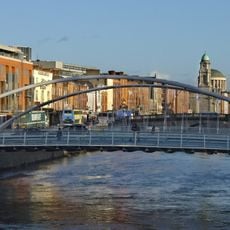
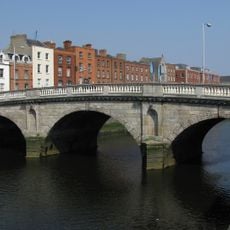
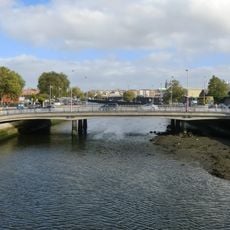
Seán Heuston Bridge is a cast iron structure spanning the River Liffey with a single arch and slender proportions suited to its location near the train station. It carries pedestrians and the LUAS tram system across the water.
Designed by George Papworth, the bridge's foundation stone was laid on 12 December 1827 and it opened in 1828 as King's Bridge, commemorating King George IV's 1821 visit. It was renamed Sarsfield Bridge in 1922 or 1923 after Patrick Sarsfield, then Seán Heuston Bridge in 1941. After the Frank Sherwin Bridge opened in the 1980s, it stopped carrying road traffic and was restored in 2001–2003 for Luas trams.
The bridge's name honours Seán Heuston, executed in 1916 for his part in the Easter Rising; it was renamed for him in 1941. Older Dubliners still call it King's Bridge, and the adjacent station is sometimes known as King's Bridge Station. The name changes track Ireland's move from British rule to independence.
The bridge is accessible to pedestrians but is actively used by trams, so visitors should watch for traffic when crossing. Early morning or evening visits offer a quieter experience away from peak times.
The German Wikipedia notes that the bridge replaced a ferry service that had crossed the Liffey at this point for nearly a hundred years, linking the Phoenix Iron Works on the north side with Kilmainham. The iron castings were made at the Royal Phoenix Iron Works on nearby Parkgate Street, the same foundry that supplied the parapets for Lucan Bridge upstream.
The community of curious travelers
AroundUs brings together thousands of curated places, local tips, and hidden gems, enriched daily by 92,800 contributors worldwide.