Ballyloughan Castle, Medieval castle in Muine Bheag, Ireland.
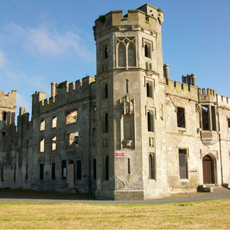
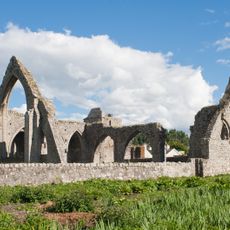
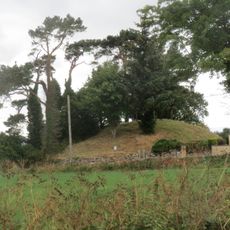
Ballyloughan Castle is a ruined castle and National Monument near Bagenalstown, County Carlow. Its surviving remains, dating to about 1300, are a twin-towered gatehouse, the hall and the foundations of one corner tower. The roughly square walls stand in places up to 15 metres high and 5 feet thick.
Ballyloughan was built around 1300, possibly in the late 13th century, by an Anglo-Norman lord to defend his lands against the Kavanagh clan, who sought to recover their ancestral territory. In the 14th century the clan retook the land and held the castle; in the 16th century it passed to the Bagenal family of Bagenalstown. In 1641 the Bagenals backed the Irish rebellion, and Cromwell's troops stormed the castle and confiscated it.
The castle reflects how Anglo-Norman settlers left their mark on Irish medieval architecture through fortified strongholds. Walking around the remains, you can see how military design shaped the landscape during a period of foreign conquest.
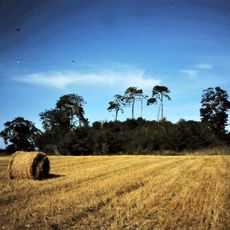
Ballyloughan Castle stands on private land and access is restricted, so the ruins are best viewed from the surrounding ground rather than entered. Excavations in 1955 uncovered medieval artefacts and traces of vanished structures. The site lies at the western end of a glacial ridge near Mount Leinster, west of Bagenalstown.
The castle's Irish name, Baile an Loch Án, means "town of the lake of the Án", after a lake west of the castle that has since vanished; bog plants still mark its former bed, and the moat was fed from it. In 1725 Eleanor Beauchamp partly restored the ruin as her residence after marrying Walter Bagenal of Dunleckney.
The community of curious travelers
AroundUs brings together thousands of curated places, local tips, and hidden gems, enriched daily by 93,134 contributors worldwide.