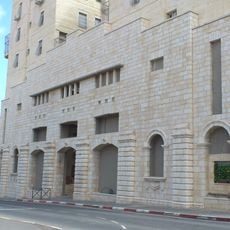
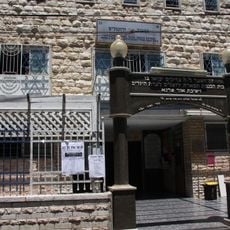
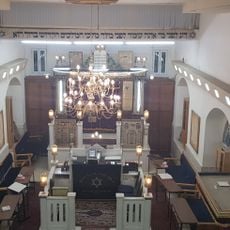
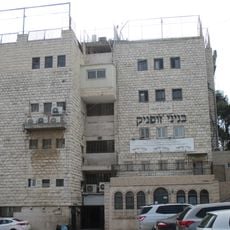
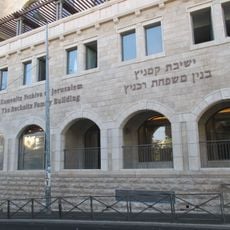
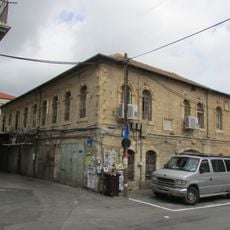
Kikar HaShabbat, street intersection in Mea Shearim and Geula, Jerusalem, Israel
Kikar HaShabbat is a public square in Jerusalem that serves as a central gathering point in a residential neighborhood. The space is surrounded by shops, cafes, and residential buildings that define the everyday character of the area.
The intersection was first named Kikar Yehezkel after the adjacent street. From 1948, Haredi groups led by Neturei Karta demonstrated here against Sabbath traffic; a June 1948 protest was dispersed by military police, and on 12 August 1950 three trucks of Hashomer Hatzair youth arrived at a demonstration, leading to rioting and police action. In 1965 the junction was officially closed to traffic on Shabbat.
The name Kikar HaShabbat (Sabbath Square) comes from the post-1948 demonstrations against Sabbath desecration held here. The intersection is the informal town square of the Haredi community of Mea Shearim, Geula and the Bukharan Quarter: it hosts the second hakafot after Simhat Torah, Chabad's Lag BaOmer procession since 1989, and welcome receptions for rabbis such as the Satmar Rebbe and Rabbi Yitzhak Tuvia Weiss in 2003. The Israeli news site Kikar HaShabbat takes its name from the junction.
Kikar HaShabbat is a five-way road junction, not a pedestrian square, so cross at the marked crossings; all four crossings, including the diagonal ones, run at the same time. The diagonal crossings are the only ones left in Jerusalem. The junction is closed to motor vehicles on Shabbat and Jewish holidays, and the surrounding streets see little traffic then.
The community of curious travelers
AroundUs brings together thousands of curated places, local tips, and hidden gems, enriched daily by 93,275 contributors worldwide.