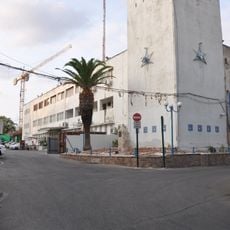
Abu-Rabakh Watermill, watermill in Adanim, Israel
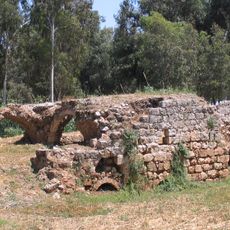
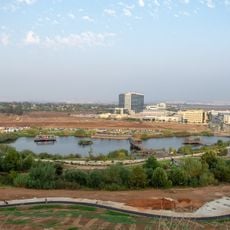
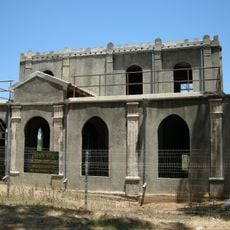
Abu-Rabakh Watermill sits on the Yarkon River and is built from stone with water-powered equipment for grinding grain into flour. The site features original water channels and milling equipment that show how the flowing river turned grain into usable flour.
The British survey recorded the site as the remains of a dam and mill called Tachonat al-Wasta, the "middle mill" between the mills of Mir and Perohya. In the 1880s Sheikh Ibrahim Abu Rabakh renovated it, banned Yarkon irrigation that would weaken its water power, and sent envoys to sabotage the neighbouring mills. Shortly before World War I he imported two turbines from Germany, one driving the millstones and one pumping water for his orchard. Milling stopped in 1959 when Yarkon-Negev pumping cut the river's flow.
The mill's Arabic name in British survey records was "Tachonat el-Wasta", the Middle Mill, sitting between the Mir and Perohya mills on the Yarkon. Sheikh Ibrahim Abu Rabakh took a commission of 10–20% of the wheat ground there, and before World War I imported two turbines from Germany, one turning the millstones and one pumping water for his orchard.
Access is via a dirt (kurkar) road turning west off Route 40, a little south of the Yarkon interchange, or from the Segula industrial zone in Petah Tikva; the Segula railway station is adjacent. The site lies on moshav Adanim land, though part belongs to Petah Tikva. Nearby are Park HaYarkon Petah Tikva, the Baptist village and Yarkon National Park; the Hidden Waterfall near Hod HaSharon can be reached on foot.
The mill was known in the British survey as "Tachonat el-Wasta", the middle mill, sitting between the mills of Mir and Perohya on the Yarkon. Sheikh Ibrahim Abu Rabakh, who restored it in the 1880s, sent envoys to sabotage those two neighbouring mills and charged Petah Tikva's residents high protection fees.
The community of curious travelers
AroundUs brings together thousands of curated places, local tips, and hidden gems, enriched daily by 94,262 contributors worldwide.