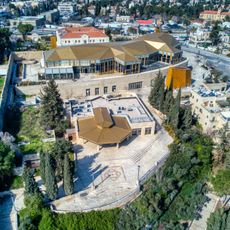
Kathisma Church, Byzantine church ruin on Jerusalem-Bethlehem road, Israel.
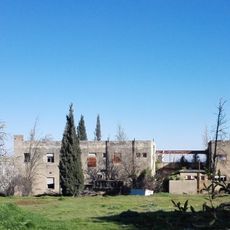
Kathisma Church is a Byzantine ruin with a distinctive octagonal layout arranged in nested rings around a central stone pillar. The site sits within an olive grove and excavations have uncovered decorative mosaic floors throughout its structure.
The widow Ikelia built the octagonal church and its monastery around 456, under Bishop Juvenal of Jerusalem, and restored it between 531 and 538. Its southern doorway became a mihrab in the first half of the 8th century while the rest still served as a church. Abandoned in the 10th century, it was quarried for stone and forgotten until roadworks on Highway 60 uncovered it in 1992; the road was shifted and the site excavated in 1997.
The name Kathisma comes from the Greek kathisma, "seat", after the rock in the centre where Mary is said to have rested. Juvenal, bishop of Jerusalem, inaugurated here the earliest feast strictly dedicated to the Theotokos, first set on 15 August and moved to 13 August. Ikelia also began a candle procession marking Mary's purification, a custom that spread to the Eastern Church and later to the West as Candlemas.
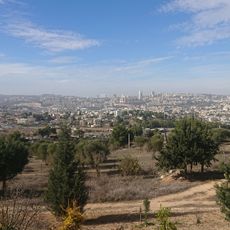
The ruins lie just off Hebron Road (Route 60), between the Mar Elias Monastery and Ramat Rachel, on the old municipal border between Jerusalem and Bethlehem. The highway route was shifted in 1992 so the site survived beside the road. The excavated area sits on bedrock inside an olive grove; an open water reservoir, Bir Qadismu, lies in the southern part of the grove.
The 6th-century De Situ Terrae Sanctae records that the Byzantine official Urbicius had the central rock cut into an altar shape and tried to ship it to Constantinople; it could not be moved past Jerusalem's St Stephen's Gate, so it was placed in the Church of the Resurrection behind Jesus's tomb for the Eucharist.
The community of curious travelers
AroundUs brings together thousands of curated places, local tips, and hidden gems, enriched daily by 92,638 contributors worldwide.