Chest opened
+${chestReward.xp} XP
Explorer
NOUVEAU ×${chestReward.collectible.quantity}
tapez pour fermer

See the monuments around you in AR Open chests in the app

Around Us is built for your phone — point your camera at the streets and discover the monuments and places around you in augmented reality. Around Us is built for your phone — chests unlock when you walk, explore and capture nearby places.

•

Enable Location

We need your location to show you interesting places around you

Discover nearby places

Find interesting locations and hidden gems around you

Precise directions

Get accurate directions and distances to places

Your location is never shared with other users. It's only used when you tap the location button.

Bibi Ka Maqbara

Log in to your account

Start exploring — it's free

Trusted by 92,310 travelers worldwide

Continue with Google
Continue with Apple
or

We will send you a code to connect

By continuing, you accept our Terms and Conditions and our Privacy Policy

Check your inbox

We've sent a pincode in your inbox. Please enter the code below.

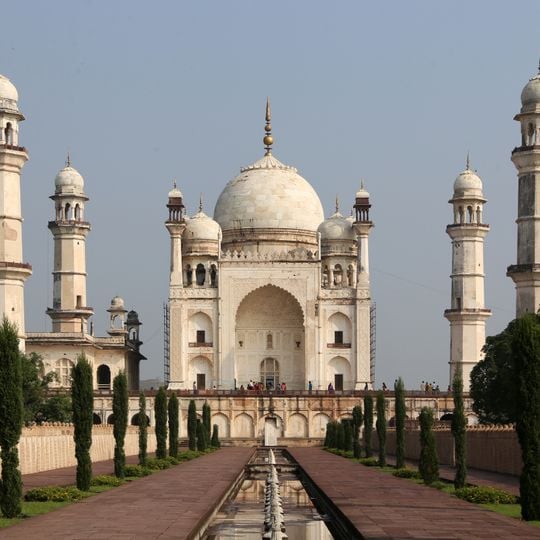
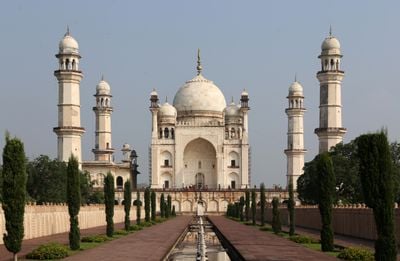
Bibi Ka Maqbara, Mughal mausoleum in Aurangabad, India.

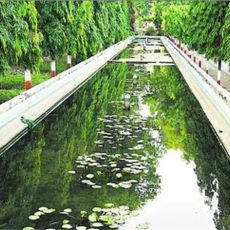
Bibi Ka Maqbara is a mausoleum set within formal gardens in central Aurangabad, India. The central dome sits atop a rectangular marble structure flanked by four tall corner towers, approached through a wide water channel running down the middle of the grounds.

Dilras Banu Begum, a Safavid princess and Aurangzeb's chief consort, died on 8 October 1657 after the birth of her fifth child. In 1660 Aurangzeb commissioned the tomb at Aurangabad, where she was buried under the title Rabia-ud-Daurani. The Tarikh Namah of Ghulam Mustafa records a cost of 668,203 rupees and seven annas against a budget of 700,000 rupees.

The name means "Tomb of the Lady," and the buried empress is named in inscriptions by her posthumous title Rabia-ud-Daurani, "Rabia of the Age." The marble came from mines near Jaipur; the traveller Jean-Baptiste Tavernier saw about three hundred carts, each drawn by at least twelve oxen, carrying it toward Golconda.

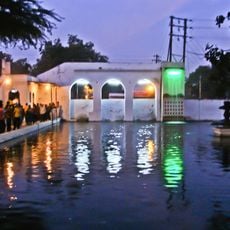
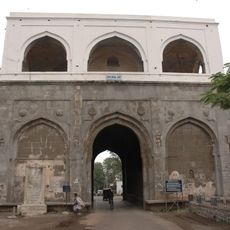
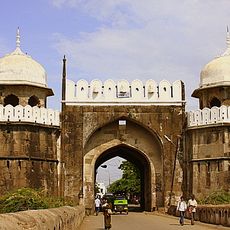
The complex is entered from the south through a main gate with foliage designs on brass plates over wood. A small tank and a screened pathway with fountains lead to the mausoleum, which is approached by steps from three sides. The tomb chamber below ground is reached by a descending flight of steps.

The actual burial chamber lies below ground level, reached by descending a flight of steps and looking through a carved screen. This lower level stays cool even when the sun heats the marble above.

The community of curious travelers

AroundUs brings together thousands of curated places, local tips, and hidden gems, enriched daily by 92,310 contributors worldwide.
Start exploring
Architectural style
Mughal architecture
Made from material
marble
GPS coordinates
19.90144,75.32023
Latest update
October 21, 2026 15:43
Reviews
Share your experience

No review yet

Discussions
Start a discussion...

No discussion yet

« Bibi Ka Maqbara - Mughal mausoleum in Aurangabad, India » is provided by Around Us (aroundus.com). Images and texts are derived from Wikimedia project under a Creative Commons license. You are allowed to copy, distribute, and modify copies of this page, under the conditions set by the license, as long as this note is clearly visible.

Discover hidden gems everywhere you go!

From secret cafés to breathtaking viewpoints, skip the crowded tourist spots and find places that match your style. Our app makes it easy with voice search, smart filtering, route optimization, and insider tips from travelers worldwide. Download now for the complete mobile experience.

Around Us App Screenshot
❝

A unique approach to discovering new places❞

— Le Figaro

❝

All the places worth exploring❞

— France Info

❝

A tailor-made excursion in just a few clicks❞

— 20 Minutes

Around Us
Travel Guide & Maps
Download

Send to your phone

QR Code
1

Open the camera app on your mobile.

2

Point at the QR code with your camera. A notification will appear.

3

Tap the notification to open the link.