Arikamedu, Archaeological site in Puducherry district, India.
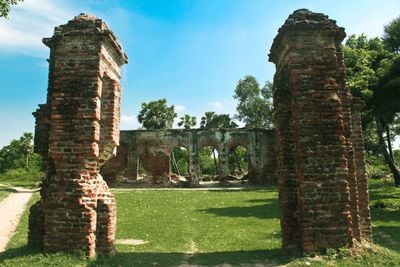
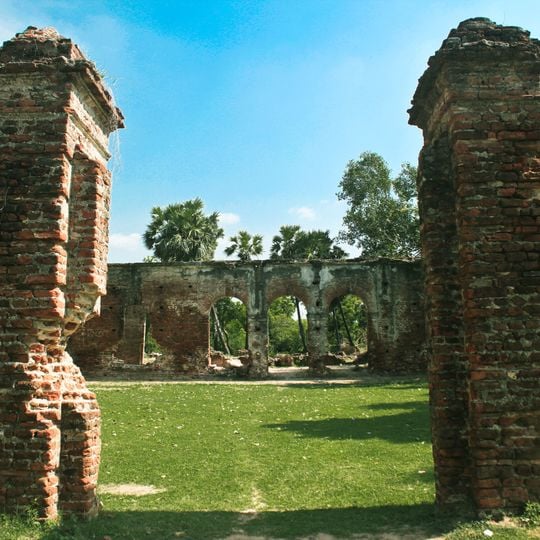
Arikamedu is an archaeological site in Puducherry district with remains of stone structures and artifacts spanning multiple historical periods. The grounds contain both ancient foundations and remnants of colonial-era missionary structures, revealing how the location was occupied and used across different eras.
The site was systematically excavated in the 1940s, uncovering layers of settlement dating back to ancient times. The findings demonstrated the extent of trade networks that once linked this location with distant Mediterranean regions.
The name Arikamedu comes from a Tamil phrase meaning Mound of Arakan, after a figurine of a Jain Tirthankara avatar found here. Local tradition also links the site to Virampattinam, the Port of Virai, a village known in Sangam literature for its salt pans. Excavations revealed thousands of Indo-Pacific beads made on site, showing that bead-making was a local craft.
The site lies 4 km south of Pondicherry on the Pondicherry-Cuddalore road; from Ariyankuppam take the Virampattinam road to Kakkayanthope. The ruins stand on the right bank of the Ariyankuppam River, which bends north here before reaching the Bay of Bengal. The grounds cover 34.57 acres under the Archaeological Survey of India, so expect open, unshaded ground and walking between scattered brick remains.
In 1937 the French Indologist Jouveau Dubreuil bought beads and gems from local children, who kept bringing him finds in exchange for sweets or coins. Among them was an intaglio carved with a portrait he identified as Augustus Caesar, prompting him to call Arikamedu "a true Roman city."
The community of curious travelers
AroundUs brings together thousands of curated places, local tips, and hidden gems, enriched daily by 93,861 contributors worldwide.