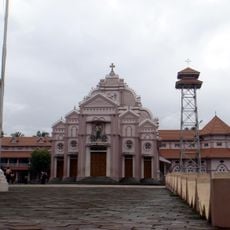
Cranganore Fort, Portuguese colonial fort in Kodungallur, India.
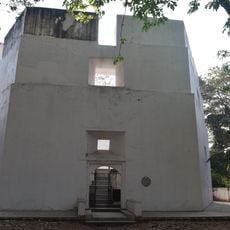
Cranganore Fort, also called Kottapuram Fort, stands at Kottappuram in Kodungallur, Thrissur District, on a small hill near the former Kottappuram jetty. Its walls were 18 feet thick and built of laterite, with bastions and a gunpowder magazine inside. Only ruins remain, now protected by the Department of Archaeology.
Built by the Portuguese in 1523 and named after Thomas the Apostle, the fort was enlarged in 1565 and controlled ships entering the Periyar River. In 1663 the Dutch took it after a siege in which Paliyattachan revealed an entry route; Urbano Fialho Ferreira and some 300 defenders died. The Dutch destroyed it and used the site to guard their trade ships. Travancore bought it from the Dutch on 31 July 1789 for Rs. 3 lakhs, and Mysore troops captured and destroyed it on 7 May 1790.
Local memory keeps the name Paliyattachan, the Cochin king's commander who left the fort and showed the Dutch the easiest way in on 15 January 1662. The assault is retold in the Malayalam war poem Patappattu, whose author is unknown, and the fort is mentioned in the Sanskrit poem Bhoomara Sandesham. The site now forms part of Kerala's Muziris Heritage Project.
The fort site is accessible from Kodungallur town center, and you can explore the stone walls and ruins on foot at your own pace. The riverside location means the ground can be uneven in places, so wear appropriate footwear for walking around the remains.
This fort was one part of the larger Nedumkotta fortification network, designed to protect trade routes and guard against threats from neighboring regions. The integrated system of multiple forts working together reveals how European powers thought about regional control in this period.
The community of curious travelers
AroundUs brings together thousands of curated places, local tips, and hidden gems, enriched daily by 92,739 contributors worldwide.