Jhansi Fort, Monument of National Importance in Jhansi, India
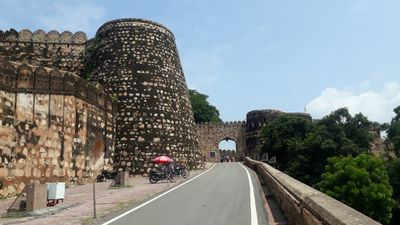
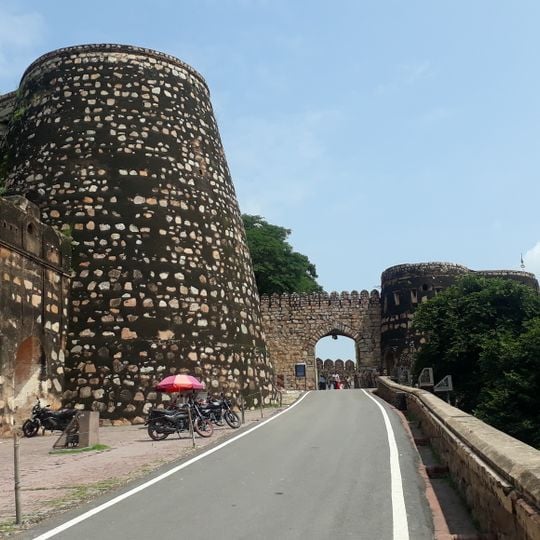
Jhansi Fort stands on Bangira hill with granite walls 16 to 20 feet thick, enclosing 15 acres measuring about 312 m by 225 m. Its south face is nearly perpendicular, and the city walls meet it there. The complex has 22 bastions, a moat on two sides, and 10 gates, including Khanderao, Datia, Bhanderi, Unnao, BadaGaon, Laxmi, Sagar, Orchha, Saiyar and Chand gates.
The Hindi Wikipedia credits the fort's construction in 1613 to Bundela king Bir Singh Ju Deo of Orchha; the English source ascribes it to Karhade Brahmin rulers. Maratha subedar Naroshanker extended it in 1729–30, and the addition was named Shankergarh. In 1857 Rani Lakshmibai took control; Hugh Rose besieged and captured Jhansi on 4 April 1858, and she escaped from Bhanderi Gate. The fort passed to Gwalior's Scindia in 1861 and was taken back by the British in 1886.
The fort's Ganesh temple stands at the entrance, and the Laxmi Gate nearby leads to the Mahalakshmi Temple, the Newalkar family's tutelary shrine. Rani Lakshmibai donated caps, blankets, clothes, motichoor laddus and money to the poor waiting at that gate. Every January–February the Jhansi Mahotsav brings performers to the fort.
Visitors can enter the fort through several gates, with the nearest railway station about 3 kilometers away in the city. Coming early provides better lighting and fewer crowds for exploring the grounds and climbing the hill.
The fort's ten gates each carry a story: the Bhanderi Gate is where Rani Lakshmibai escaped on horseback with her adopted son in April 1858, while the Orchha Gate was reportedly opened by a guard named Rao Dulhaju, though no historical document confirms this. The Chand Gate takes its name from Afatab Bano Begum, who watched the moon from it during Eid.
The community of curious travelers
AroundUs brings together thousands of curated places, local tips, and hidden gems, enriched daily by 93,340 contributors worldwide.