Ram Mandir, Hindu temple in Ayodhya, India
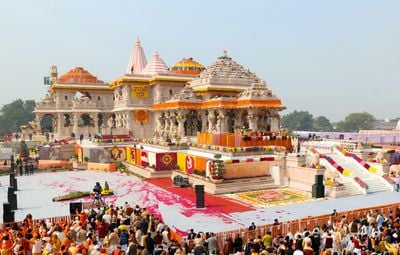
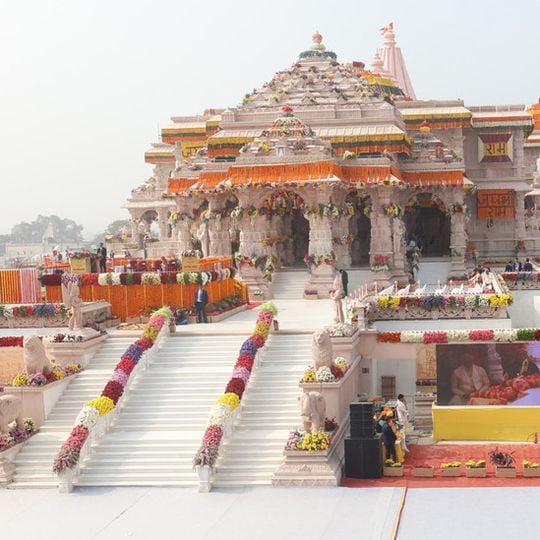
Ram Mandir is a Hindu temple complex in Ayodhya, Uttar Pradesh, built on the Ram Janmabhoomi site. Its pale cream and pink sandstone base is reached by a broad central staircase with a white balustrade lined with red, yellow, pink and purple flower garlands; two sculpted elephants sit at the foot of the stairs. Above, a pillared portico draped with thick orange marigold garlands leads to a stepped, pyramidal roof capped by a red finial. Vertical banners reading "श्री राम" hang on the right side of the facade.
Around 1529, Mir Baqi built the Babri Masjid on this site under orders from the Mughal ruler Babur. In 1859, the British fenced off the inner court for Muslim worship and the outer court for Hindu puja. A mob demolished the mosque in December 1992; in 2019 the Supreme Court awarded the land to Hindus, and Narendra Modi performed the temple's consecration on 22 January 2024.
The temple is known as the birthplace of Rama, a king from ancient stories who today represents a divine model for many believers. Pilgrims come from all parts of the country and beyond to speak prayers here and take part in the daily rituals.
The site has separate areas for prayers, meditation and ceremonial events, with different entrances organised by visitor purpose. Anyone visiting the inner part should expect longer waiting times, especially on festival days and weekends.
The temple follows the traditional Nagara style of northern Indian sacred architecture, where towers and peaks rise towards the sky and stonework is decorated with intricate patterns. Engineers used modern techniques to ensure stability without changing the outer design of the structure.
The community of curious travelers
AroundUs brings together thousands of curated places, local tips, and hidden gems, enriched daily by 93,392 contributors worldwide.