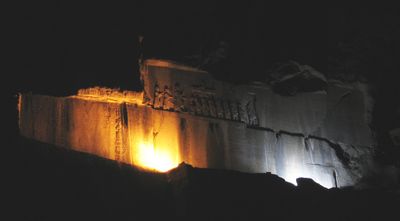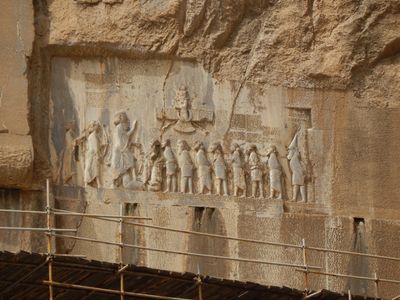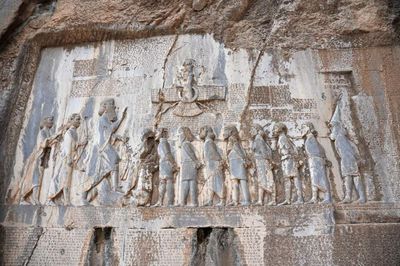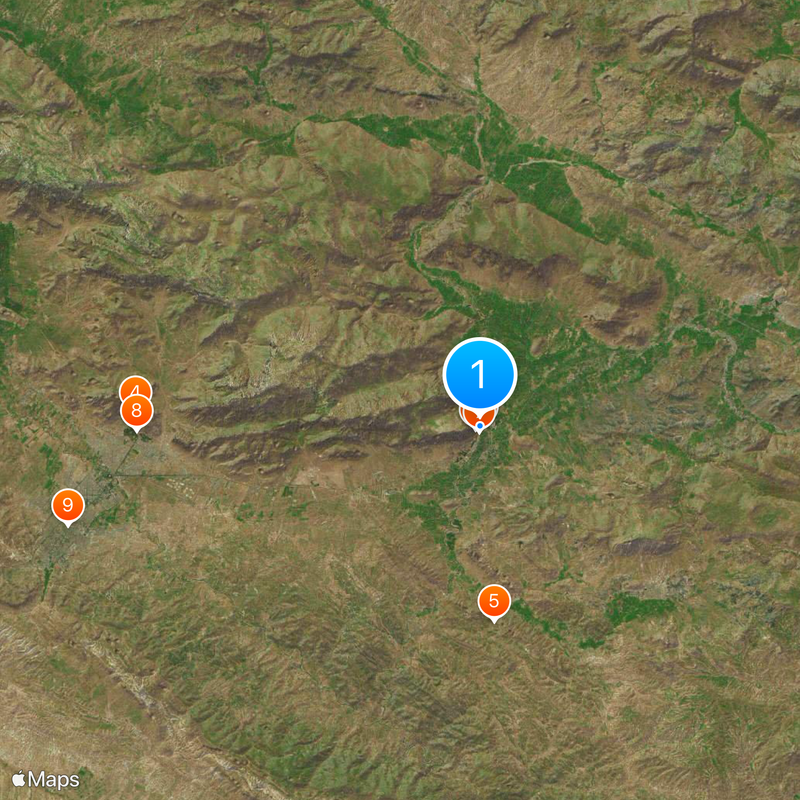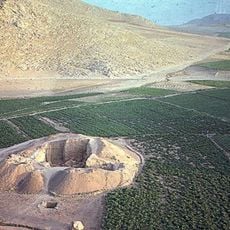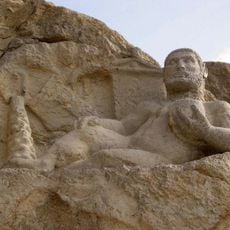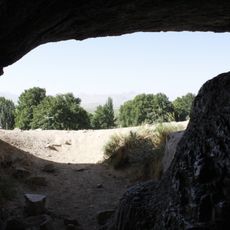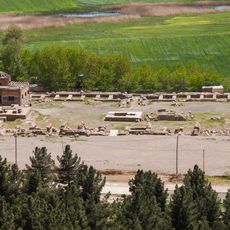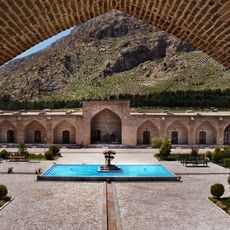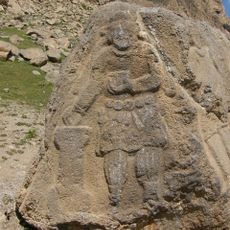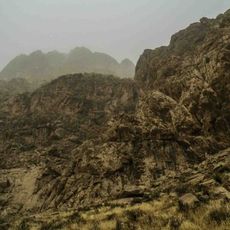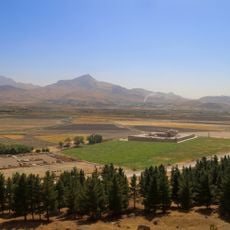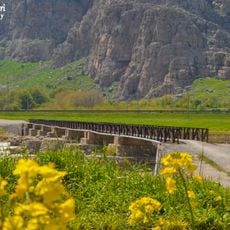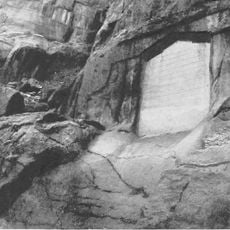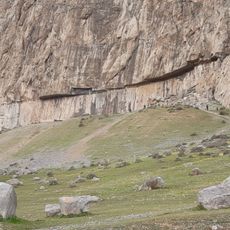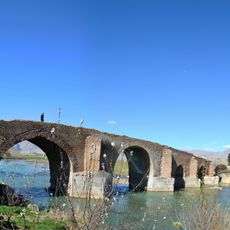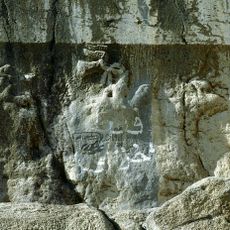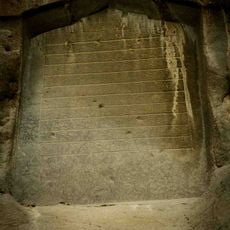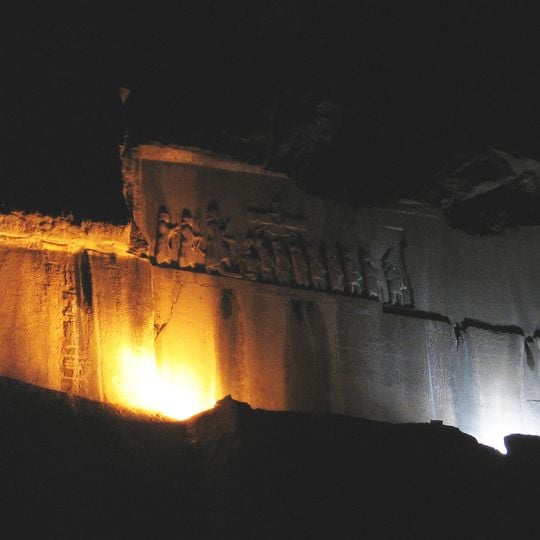
Behistun inscription, Rock relief and inscription in Harsin County, Iran.
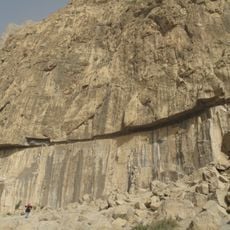
The Behistun Inscription sits on a limestone cliff in Harsin County and displays Old Persian, Elamite, and Babylonian script alongside a large rock relief. The relief runs horizontally across the rock face and combines sculptural figures with long passages of cuneiform text.
Darius I commissioned the inscription between 522 and 486 BCE to record his military victories and establish his claim to the Persian throne. Later, in the 19th century, the inscriptions were systematically documented and contributed to deciphering cuneiform script.
The multilingual inscription communicated royal messages across trade routes through three major languages of the ancient world. This choice of languages made the text accessible to travelers and merchants of different backgrounds.
The relief is only visible from a distance with binoculars or telephoto lenses, as it sits high on the rock face and is not publicly accessible. The best time for photography is morning, when light brings out the script and relief more clearly.
The inscription served as a key to decoding ancient cuneiform writing systems through its parallel texts in three different languages. Scholars were able to compare the three versions and work out the meaning of individual characters.
The community of curious travelers
AroundUs brings together thousands of curated places, local tips, and hidden gems, enriched daily by 91,097 contributors worldwide.