Shah Mosque, Islamic architectural monument in Isfahan, Iran
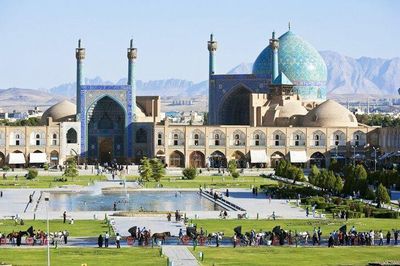
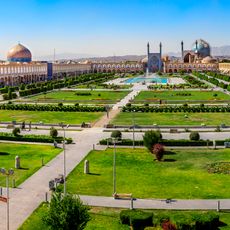
The Shah Mosque is a religious building on the southern side of Naqsh-e Jahan Square in Isfahan, Iran, known for its large blue dome and tall minarets. The complex includes a rectangular courtyard with a water basin in the center, surrounded by two-story arcades and prayer halls on each side.
Shah Abbas I ordered the mosque begun in 1611 (1020 AH), the 24th year of his reign, to honour his ancestor Shah Tahmasp. The main foundation inscription above the entrance iwan names Ali Akbar Isfahani as architect and Mohebb Ali Beg as supervisor and donor; calligrapher Ali Riza designed the epigraphy. Work finished around 1630–31 under Shah Safi, and the alabaster dadoes were added in 1638.
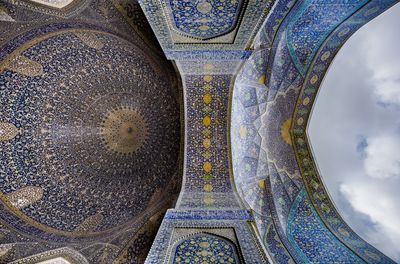
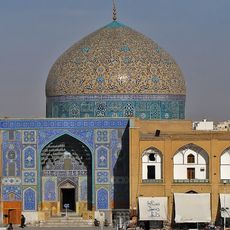
The name honors Shah Abbas the First, the Safavid ruler who made Isfahan the capital of his empire. The symmetrical facade facing the square shows blue and turquoise tile patterns, while calligraphy in Kufic and Naskh scripts repeats sacred texts along the arches and portals.
The portal on Naqsh-e Jahan Square faces north, but the vestibule turns about 45 degrees southwest so the prayer hall and mihrab align with the qibla. The entrance iwan rises about 27.5 metres, its minarets 33.5 metres. Look for the foundation inscription above the entrance iwan's doorway naming the architect Ali Akbar Isfahani and supervisor Mohebb Ali Beg.
The main dome measures 52 meters (171 feet) in height and consists of two shells with an air space between them, which reduces weight and enhances acoustics. This double-walled construction allows a clap at the floor to return as multiple echoes heard throughout the interior.
The community of curious travelers
AroundUs brings together thousands of curated places, local tips, and hidden gems, enriched daily by 93,384 contributors worldwide.