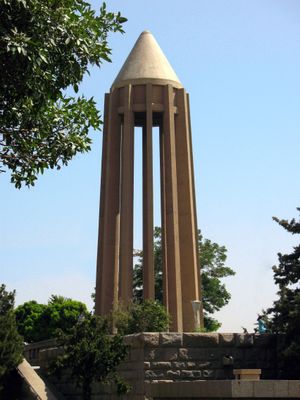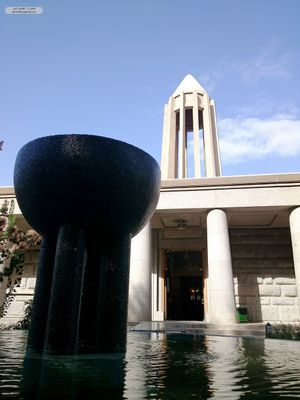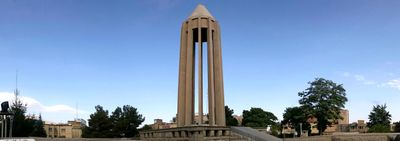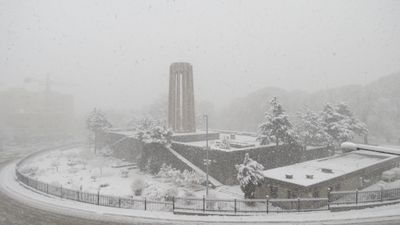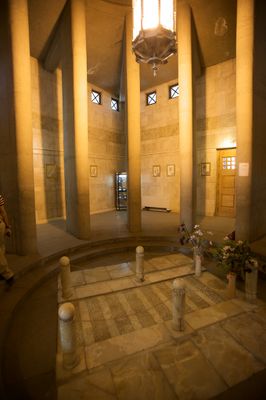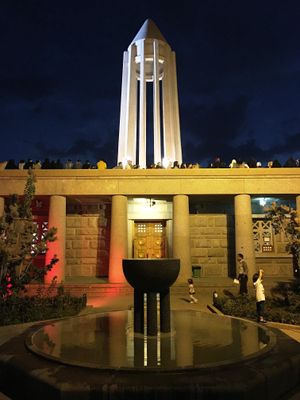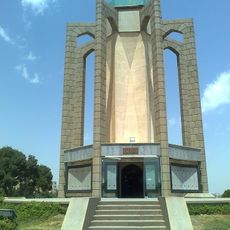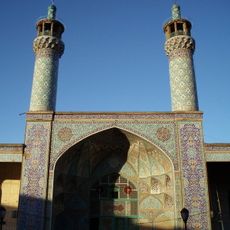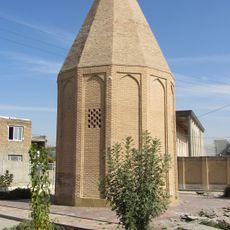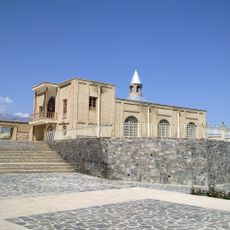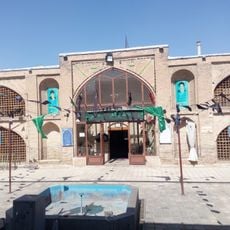
Avicenna Mausoleum, Memorial tower in Hamadan, Iran.
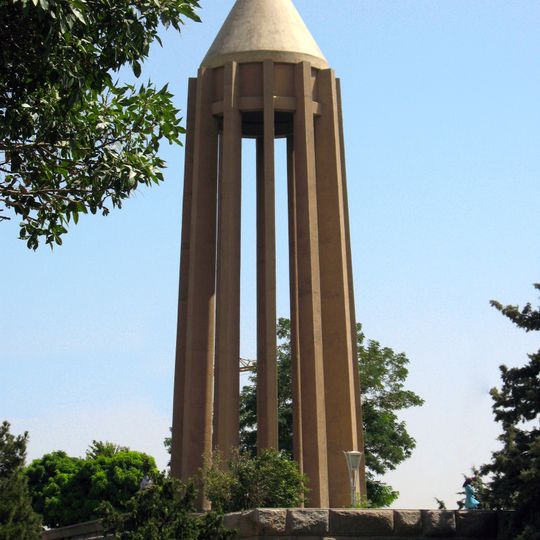
The Avicenna Mausoleum is a slender tower of reinforced concrete and granite built in Hamadan, Iran, rising 23 meters (about 75 feet) tall. Inside, it contains a library and a museum dedicated to the Persian scholar Ibn Sina.
The project was started in 1939 under Pahlavi rule and designed by architect Hooshang Seyhoun, who had studied in Paris at the Ecole des Beaux-Arts. It was built during a period when the Iranian state began to promote pre-Islamic and classical Persian figures as national symbols.
The tower honors Ibn Sina, known in the West as Avicenna, a scholar who worked in medicine and philosophy around the 10th and 11th centuries. Inside, visitors can see manuscripts and personal objects that give a sense of how wide-ranging his work was.
The tower sits in central Hamadan and can be reached on foot from most parts of the city center. The city is on a highland plateau, so the weather can be cooler than expected, especially in the morning and evening.
After the 1979 Islamic Revolution, some groups called for the tower to be torn down, but Ayatollah Khomeini personally intervened to protect it. He saw Ibn Sina as an inseparable part of Persian heritage, and the structure was left untouched.
The community of curious travelers
AroundUs brings together thousands of curated places, local tips, and hidden gems, enriched daily by 91,182 contributors worldwide.