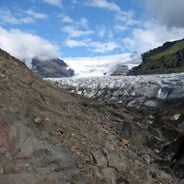
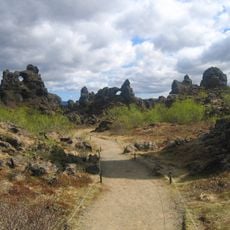
Mývatn, Geological lake formation in Þingeyjarsveit, Iceland.
Mývatn is a lake in northern Iceland featuring diverse volcanic formations and geothermal features throughout the surrounding landscape. The shoreline and basin support rich aquatic life and warm springs that shape the local environment.
Mývatn was formed about 2,300 years ago by a large fissure eruption of basaltic lava from the Þrengslaborgir crater row, which flowed down Laxárdalur and reached the sea. Where the lava met a precursor lake, steam explosions built the rootless cones of Skútustaðir, now a protected natural monument. In the 18th century a lava flow spared the church of Reykjahlíð and the villagers; the present church was built in 1962.
The name combines Icelandic mý (midge) and vatn (lake). The midges are mostly harmless chironomids that form black columns on the shore for about two weeks twice each summer; locals call them rykmý, dust midges. Carbon dioxide seeping from the ground and lake draws the swarms, and historical accounts record horses suffocating when midges blocked their airways.
The lake is accessible with many walking paths around the shoreline and easy access to geothermal areas with steam vents and hot springs. Weather can change quickly in the region, so visitors should prepare for varying conditions and wear sturdy footwear.
The lake serves as a breeding ground for an unusually large number of duck species that return here each spring to nest. This concentration of waterfowl makes the area a major destination for bird watchers from around the world.
The community of curious travelers
AroundUs brings together thousands of curated places, local tips, and hidden gems, enriched daily by 95,036 contributors worldwide.