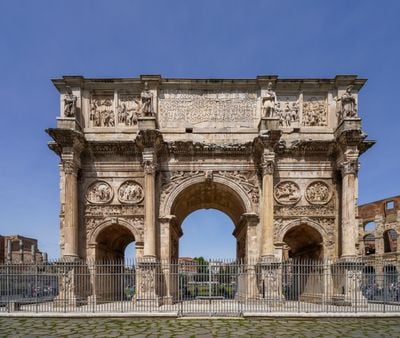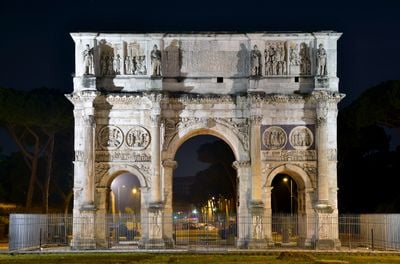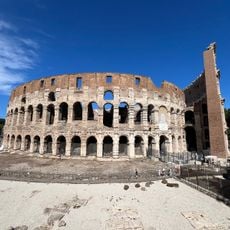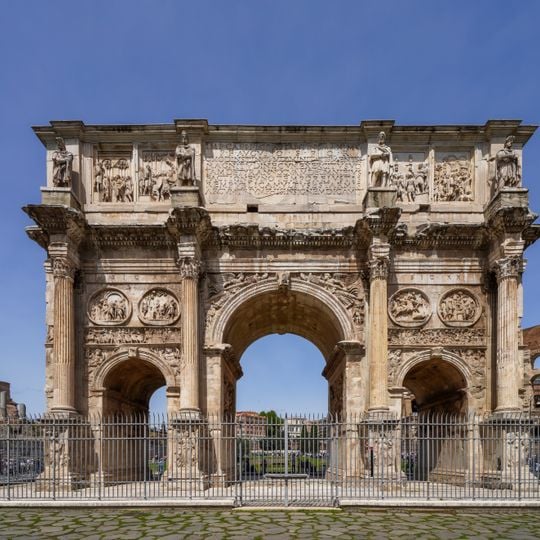
Arch of Constantine, Triumphal arch near Colosseum, Italy.
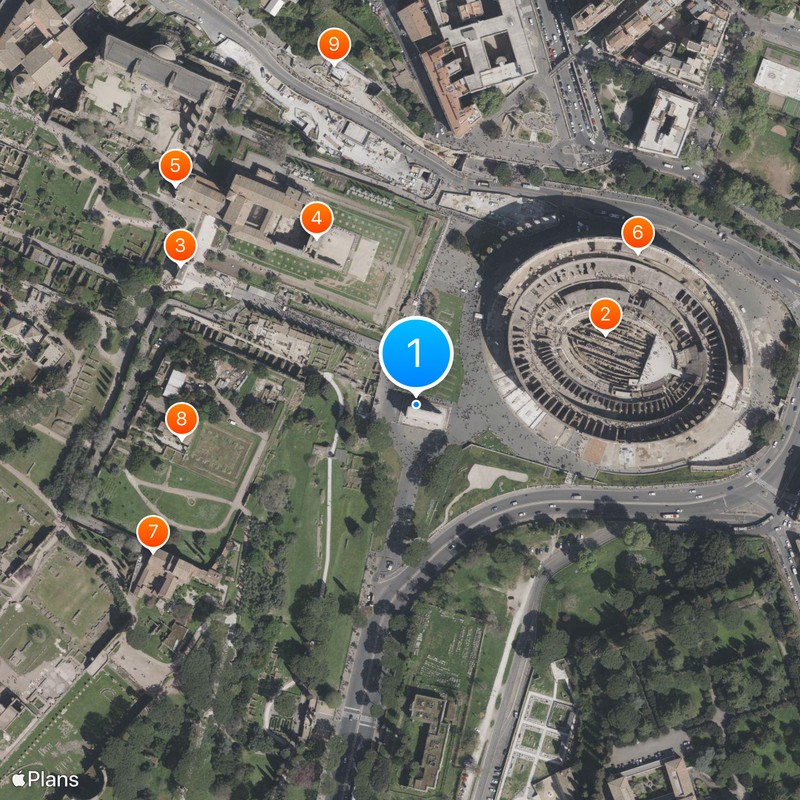
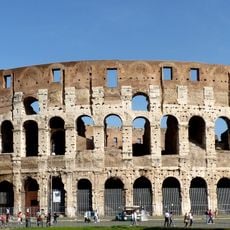
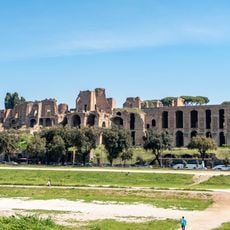
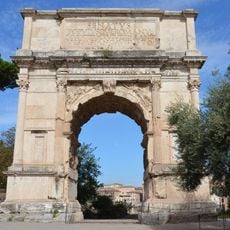
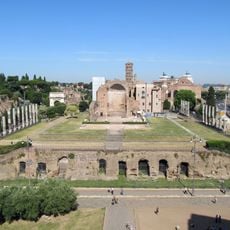
The Arch of Constantine is a three-arched Roman monument in the Celio district of Rome, Italy, standing between the Colosseum and the Palatine Hill. The structure displays Corinthian columns and a wealth of reliefs distributed across its facade, depicting scenes from battles and imperial ceremonies.
The Senate dedicated the monument in 315, three years after Constantine defeated Maxentius at the Milvian Bridge and gained control of Rome. Later emperors maintained the structure, and it remained largely intact throughout the Middle Ages and the Renaissance.
The monument carries Latin inscriptions praising Constantine's victory and rule, while reused reliefs show different emperors in similar poses. Visitors can compare the contrasting styles of the inserted artworks directly, as older works stand beside newer fourth-century carvings.
The site stands freely accessible in the open air and can be viewed from outside at any time without requiring a ticket. Early morning hours offer quieter conditions and better light for photos, while late afternoon casts longer shadows.
The monument served as the finish line for the Olympic marathon in 1960, with Ethiopian runner Abebe Bikila passing barefoot under it to win. This event brought the ancient Roman structure into modern sporting history, linking two different eras at a single location.
The community of curious travelers
AroundUs brings together thousands of curated places, local tips, and hidden gems, enriched daily by 91,253 contributors worldwide.