Province of Gorizia, Former administrative province in Friuli Venezia Giulia, Italy.
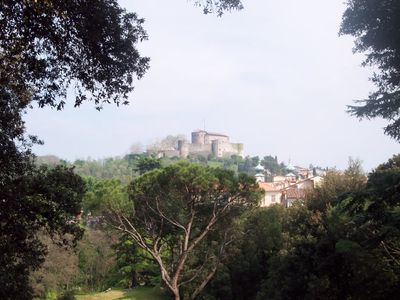
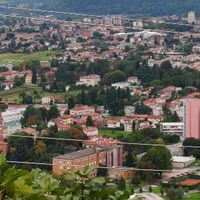
Gorizia is an administrative region in northeastern Italy that borders Slovenia and extends from alpine foothills toward the Adriatic coast. The territory mixes lowland plains, rolling vineyards, and mountain areas, with more than twenty communities scattered across its landscape.
The territory was part of the Austro-Hungarian Empire until World War I, after which it became Italian. It was established as a separate province in 1927, breaking away from the province of Udine.
Slovene is spoken by about 11% of the province's population, and Italian law protects the Slovene linguistic minority in 9 of its 25 municipalities. In Doberdò del Lago, Savogna d'Isonzo and San Floriano del Collio the Slovene majority is the local norm, while most Slovene speakers live in the urban area of Gorizia. Place names on signs often appear in two languages.
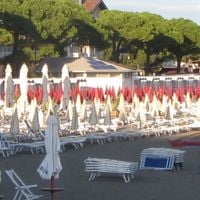
The region is accessible by road and train, with convenient connections to Slovenia and the rest of Italy. Spring and autumn offer the most comfortable weather, while coastal areas attract crowds in summer.
In 1947 the Paris peace treaty left Italy only about 215 of the province's 2,730 square kilometres, nine of its 42 municipalities; the other 33 passed to Yugoslavia. The 1975 Treaty of Osimo then adjusted the border on Mount Sabotino, returning the ridge between the summit and the ruins of the church of San Valentino to Italy.
The community of curious travelers
AroundUs brings together thousands of curated places, local tips, and hidden gems, enriched daily by 95,565 contributors worldwide.