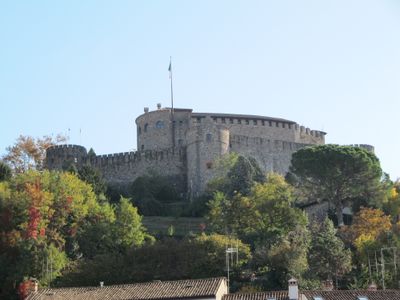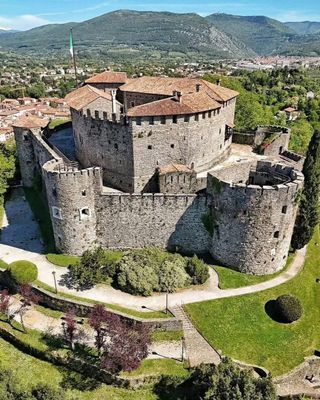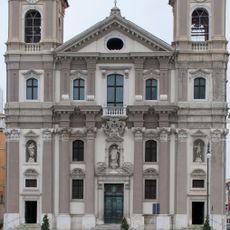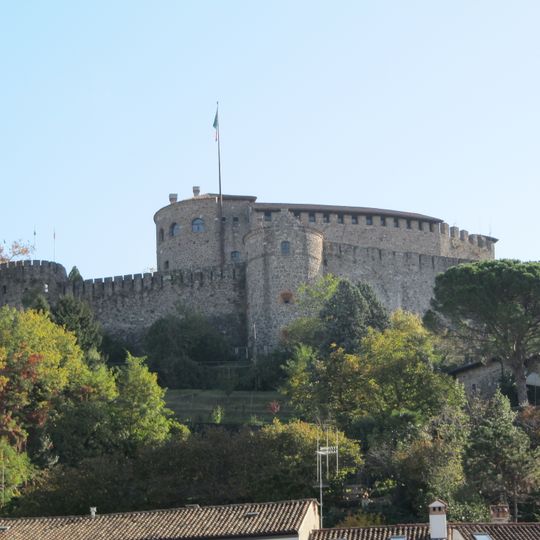
Castle of Gorizia, Medieval fortress on a hill in Gorizia, Italy.
The Castle of Gorizia rises at the city's highest point and displays military architecture marked by solid walls, bastions, and towers arranged across the landscape. The fortress combines construction from different periods, creating a layered structure that reflects centuries of defensive design.
The fortress originated in the 11th century as a residence for the Counts of Gorizia, who controlled territories spanning present-day Italy, Austria, and Slovenia. This dynasty remained influential across the region for several generations.
The castle gave its name to the House of Gorizia, whose counts titled themselves after it from the 12th century. Above the entrance stands a 16th-century Lion of Saint Mark, the Venetian symbol, never displayed during the thirteen-month Venetian occupation and only put in place in 1919. Since 1981 the castle has hosted the Sergio Amidei Prize for screenwriting.
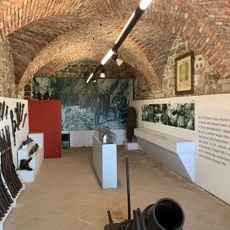
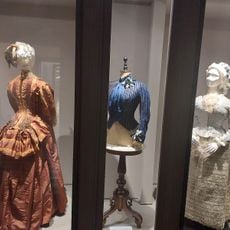
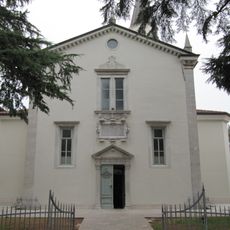
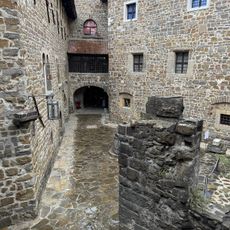
The castle stands on a 155 m hill above Gorizia, reached on foot through the public park that covers the hilltop around it. The museum occupies the interior, with the central courtyard holding the remains of the 11th-century keep. Above the entrance look for the Lion of Saint Mark, placed there in 1919.
The Lion of Saint Mark above the entrance, carved in the 16th century, was never displayed during Venice's thirteen-month rule and waited until 1919 to be put in place. Inside the courtyard, the footings of the 11th-century keep demolished under Venetian rule are still visible. From 1981 to 2006 the castle hosted the Sergio Amidei Prize for screenwriting.
The community of curious travelers
AroundUs brings together thousands of curated places, local tips, and hidden gems, enriched daily by 92,586 contributors worldwide.