Vulcano, Volcanic island of Tyrrhenian Sea, Italy
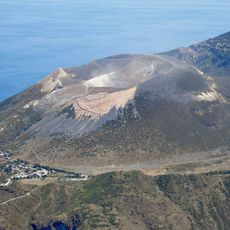
Vulcano is a volcanic island in the Tyrrhenian Sea north of Sicily, part of the Aeolian archipelago with an active fumarole system. The main crater Gran Cratere sits on a summit with rising sulfur gas and steam clouds above barren slopes of pumice and lava.
The Fossa cone's last eruption ran from 2 August 1888 to 22 March 1890, documented by Giuseppe Mercalli, whose account of cannon-like explosions gave the name to Vulcanian eruptions. Blocks thrown from the vent fell into the sea between Vulcano and Lipari. The Romans mined alum and sulfur here, an activity that continued until the end of the nineteenth century.
The island's name comes from Vulcan, the Roman god of fire, whose forge the Romans placed here; the word "volcano" derives from it. Islanders are called vulcanari. The Greeks, who called it Hiera, held that Hephaestus worked at forges beneath it, and some scholars link the rock-cut caves at Piano to funeral rites for the dead brought from the other Aeolian islands.
Hiking routes to the crater begin near the port area and take roughly 45 minutes uphill over loose rock, requiring sturdy footwear. Early morning or late afternoon offers more comfortable temperatures, as the black ground retains heat and shade is scarce.
Thermal activity beneath the shallow seabed warms coastal waters and creates visible gas bubbles rising through turquoise water. Small black sand beaches form from eroded volcanic ash and attract visitors experiencing the warm, mineral-enriched coastal zones.
The community of curious travelers
AroundUs brings together thousands of curated places, local tips, and hidden gems, enriched daily by 93,520 contributors worldwide.