Santa Costanza, Early Christian church in Via Nomentana, Rome, Italy
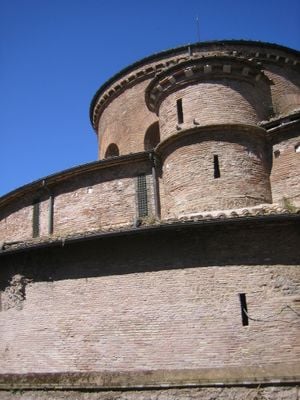
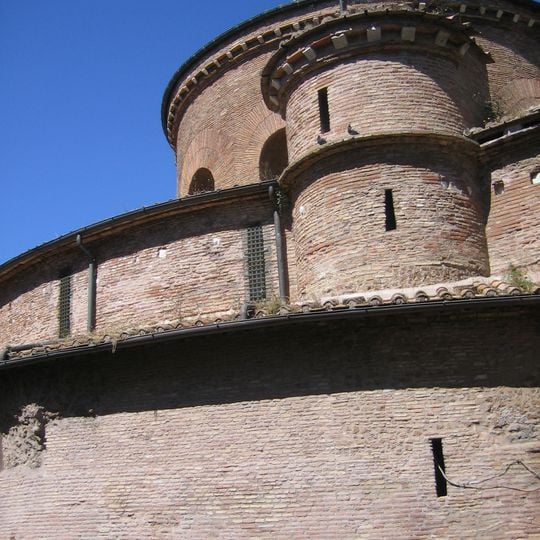
Santa Costanza is an early Christian church on Via Nomentana in Rome with a circular structure and a central dome supported by twelve pairs of columns. The interior preserves important fourth-century mosaics in the vaults that surround the main space.
The building was constructed between 337 and 350 as a mausoleum for Constantina, daughter of Emperor Constantine, originally serving a secular purpose. Over time it was converted into a church and took on religious functions.
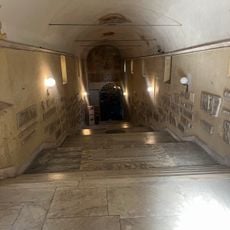
The ambulatory vault keeps its fourth-century mosaics: grape harvest, carting and treading scenes, peacocks, doves and winged cupids, repeated in matching panels on opposite sides. A female bust in one emblem is identified by some scholars as Constantina herself. Because of the vintage scenes, the building was long mistaken for a temple of Bacchus.
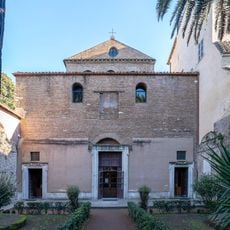
The building stands next to the Basilica of Sant'Agnese and remains open to visitors who can examine the architecture and preserved late antique decoration. Being near the adjacent basilica allows you to explore multiple important sites in a single visit.
The grape-harvest scenes in the ambulatory mosaics led scholars for centuries to mistake the building for a Temple of Bacchus. A drawing by the Portuguese artist Francisco de Hollanda is the main record of the lost dome mosaic, destroyed around 1620.
The community of curious travelers
AroundUs brings together thousands of curated places, local tips, and hidden gems, enriched daily by 94,657 contributors worldwide.