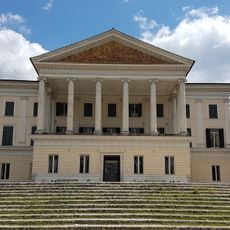
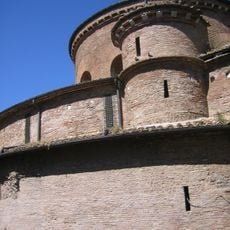
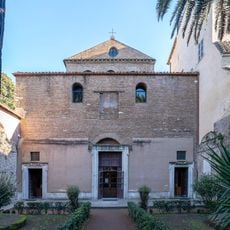
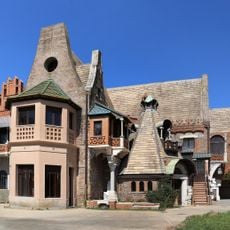
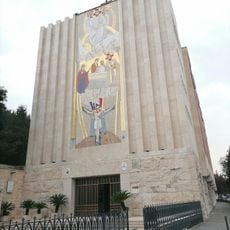
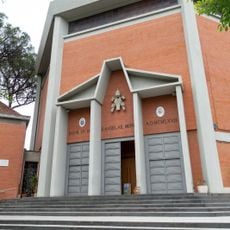
Catacomba maggiore, Early Christian burial site in Via Nomentana, Rome, Italy.
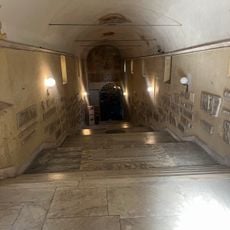
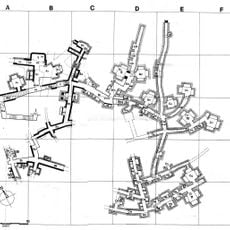
The Catacomba Maggiore, also called Coemeterium Maius, is a catacomb along the Via Nomentana in Rome's Trieste district. It began in the mid-3rd century as two separate nuclei with independent stairways near today's entrance on Via Asmara, and was unified by the end of that century. It contains one of Rome's longest underground galleries, almost 200 metres long. A monumentalised crypt, found in 1876 by Mariano Armellini, is divided by an arch and has cross vaults, columns with capitals, a skylight, a tufa chair and a tufa table for holy oils.
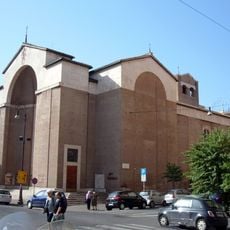
The catacomb began around the mid-3rd century as two separate nuclei with independent stairways near today's entrance on via Asmara, dug after a Roman rural villa on the site was abandoned and reused for burials. By the end of that century the two sections were united, creating the largest catacomb in Rome, which remained in use until the first half of the 5th century. Early medieval pilgrim itineraries mention a surface basilica dedicated to Saint Emerentiana and two underground tombs turned into shrines for Saints Victor and Alexander.
The name Coemeterium Maius comes from the size of the cemetery and the density of its galleries, which include a passage of almost 200 metres. Early medieval pilgrim itineraries list the site under this name. In the region of the chairs, seven seats cut from tufa, dating to the first half of the 4th century, were used for the refrigerium rites, funeral banquets held at the tombs on the anniversary of the dead.
The catacomb lies along the Via Nomentana in the Trieste district, with its entrance on Via Asmara. The two original access stairways stood at this point before the halves were joined at the end of the 3rd century. The cemetery stayed in use until the first half of the 5th century.
In 1876 Mariano Armellini found a monumental underground crypt here and mistook it for the tomb of Saint Emerentiana; later study identified it as the burial place of the martyrs Victor and Alexander. The chamber is split by an arch and fitted with cross vaults, columns with capitals and a light shaft, plus a chair and an oil table cut from the tufa.
The community of curious travelers
AroundUs brings together thousands of curated places, local tips, and hidden gems, enriched daily by 92,621 contributors worldwide.