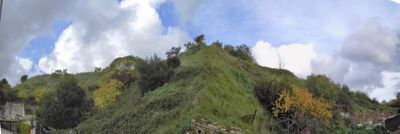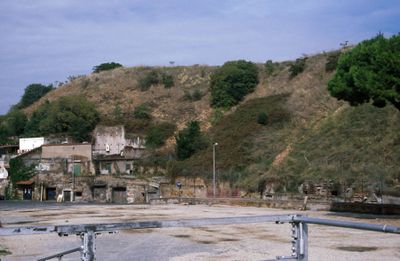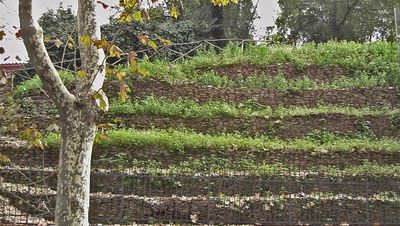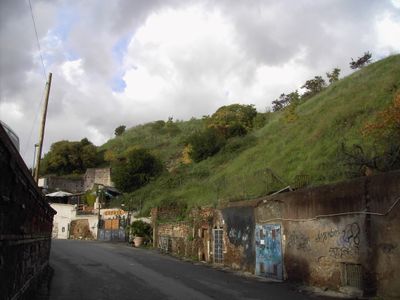
Monte Testaccio, Ancient Roman archaeological hill in Testaccio, Italy
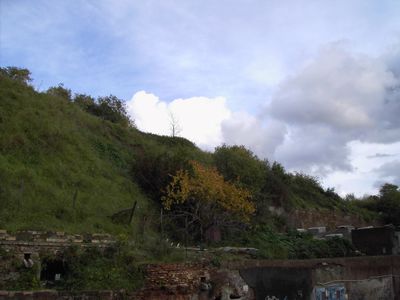
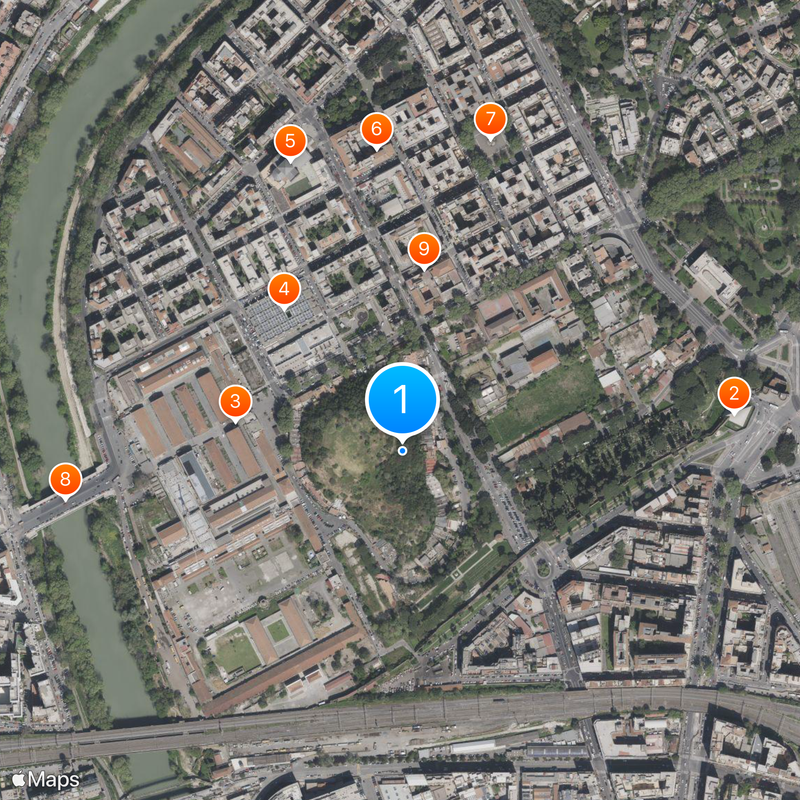
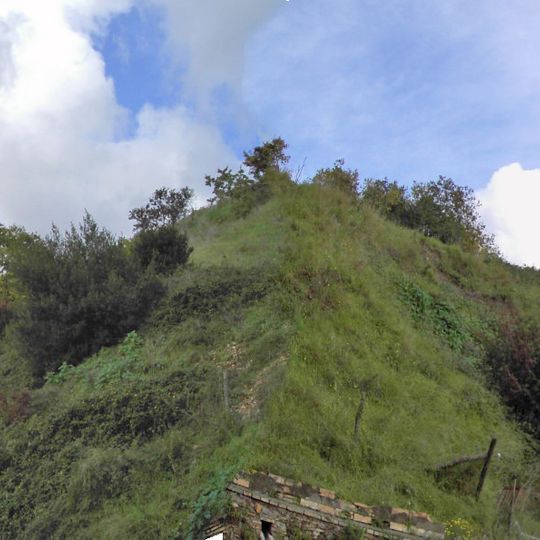
Monte Testaccio is an artificial mound made entirely from broken Roman pottery vessels and spans roughly one kilometer in circumference. The area was later used for housing and still contains archaeological remains buried beneath its layers.
The accumulation formed between 140 BC and 250 AD from discarded containers that carried olive oil to the port on the Tiber River. The mound's growth reflects the enormous volume of imports Rome needed at that time.
The mound shows traces of ancient commerce through inscribed pottery fragments that reveal where goods came from and what they contained. These remains tell the story of how central olive oil was to everyday Roman life.
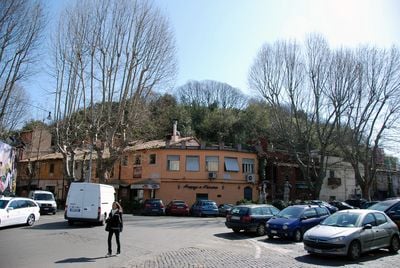
The site is easy to reach on foot and allows direct access to the archaeological remains that you can explore from different angles. There are also steps and paths for climbing to the top and taking in the surrounding views.
The mound was built from so many broken containers that it became an important place for studying Roman economy and trade patterns. The layers still hold clues about individual trade routes and how frequently ships sailed the same routes.
The community of curious travelers
AroundUs brings together thousands of curated places, local tips, and hidden gems, enriched daily by 60,000 contributors worldwide.