Palazzo Senatorio, palazzo on the Capitoline Hill, Rome, Italy
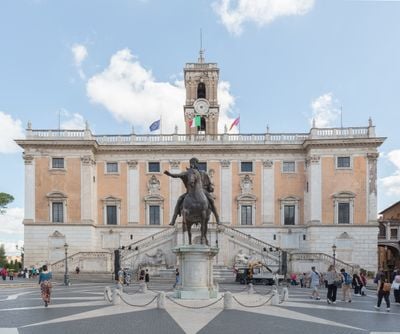
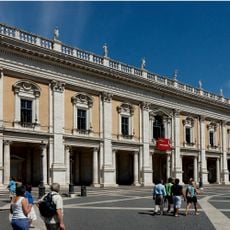
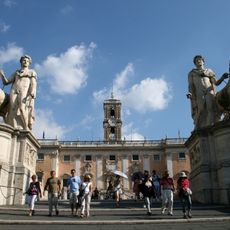
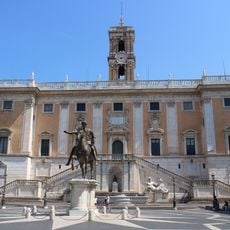
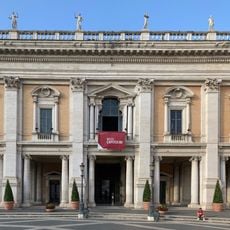
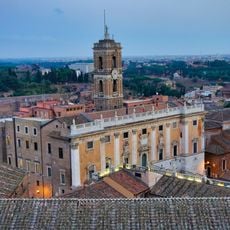
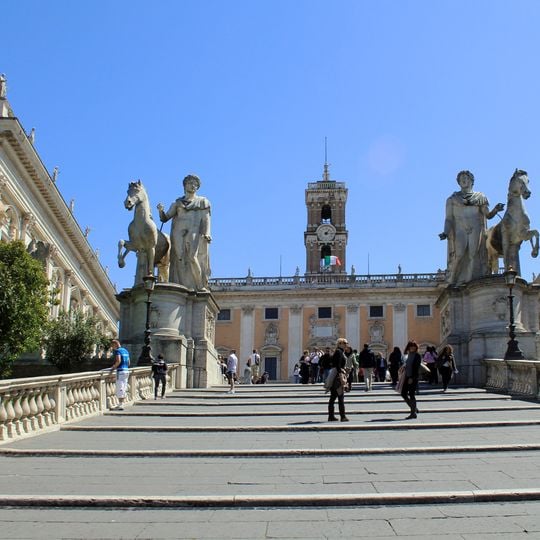
The Palazzo Senatorio faces Piazza del Campidoglio with a symmetrical ochre and pale-stone front: a slightly projecting central block, a rusticated ground level with doorways, and rows of rectangular windows framed by pilasters. A double stone staircase drawn by Michelangelo descends from the central doorway, with statues of the Nile and the Tiber flanking the goddess Roma above a fountain. A square brick tower with a clock and an arched belfry opening rises above the roof.
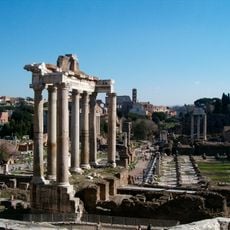
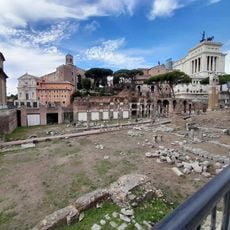
The palace stands on the Tabularium, the state archive built in 78 BC, and on the temple of Veiove. After the Corsi family's fortress was demolished in 1105, construction of a town hall began between the late 12th and early 13th century. In 1537 Michelangelo took over the Capitoline project; Giacomo della Porta completed the main facade between 1593 and 1598.
The building houses the municipal government of Rome, continuing its centuries-old tradition as the center of civic administration since the 12th century.
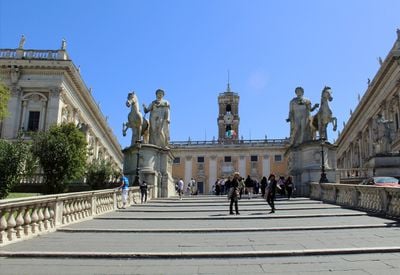
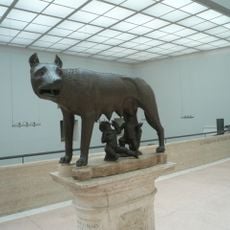
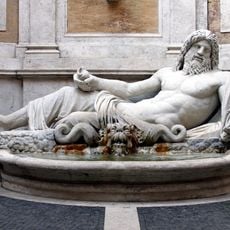
The palace entrance is reached by the double staircase designed by Michelangelo, which descends from the central doorway to the Piazza del Campidoglio. The stair is flanked by statues of the Nile and the Tiber, with a seated Roma at its centre above a fountain basin. A secondary entrance on the left, toward via di San Pietro in Carcere, is marked by an Ionic column topped by a copy of the Capitoline Wolf.
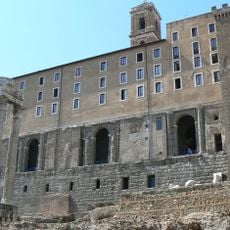
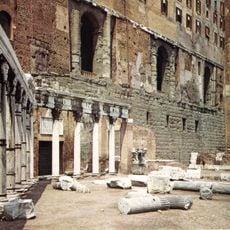
The palace stands on the Tabularium, the state archive built in 78 BC by the consul Quintus Lutatius Catulus, with Lucius Cornelius as architect. Its massive substructure was kept as a terrace and reinforcement when the medieval town hall was raised above it, and the two corner towers still recall the fortress of the Corsi family.
The community of curious travelers
AroundUs brings together thousands of curated places, local tips, and hidden gems, enriched daily by 94,635 contributors worldwide.