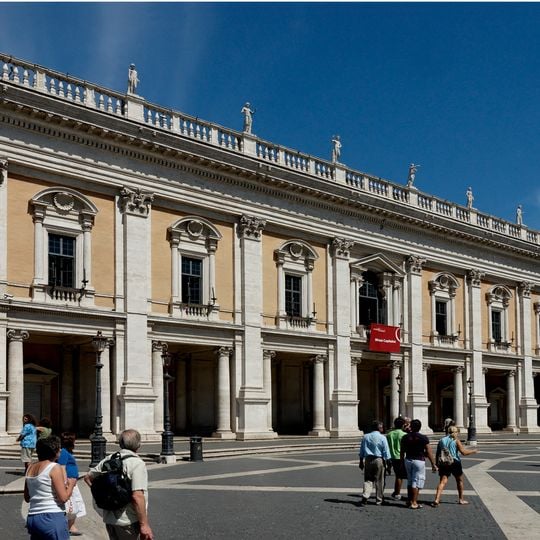
Capitoline Museums, Art museum in Piazza del Campidoglio, Rome, Italy
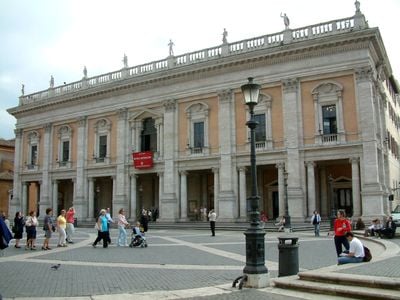
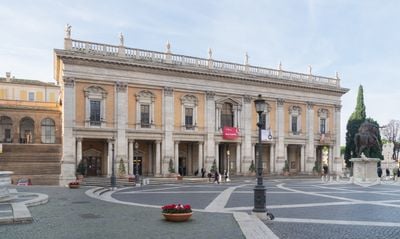
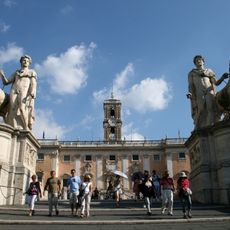
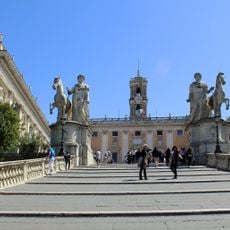
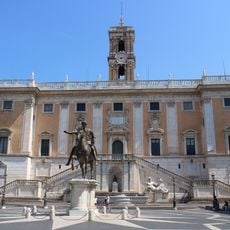
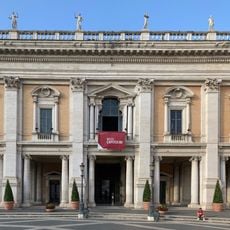
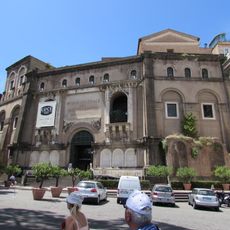
The Capitoline Museums occupy the Palazzo dei Conservatori and the Palazzo Nuovo, facing each other across Piazza del Campidoglio, the square Michelangelo planned in 1536. The Conservatori facade shows a pale ochre upper wall over a grey stone lower level, with a balustrade of statues along the roofline and a deep columned portico below; a red banner reading "Musei Capitolini" hangs above the entrance. The two palaces are joined by an underground gallery built in the 1930s.
Pope Sixtus IV founded this institution in 1471 by donating bronze sculptures to the Roman people. It is thereby considered one of the first publicly accessible museums in the world.
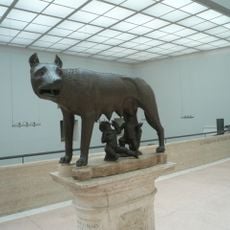
The Capitoline Wolf, a bronze given by Sixtus IV in 1471, was long held to be Etruscan work of the 5th century BC; some restorers now argue it is medieval, from the 12th century. The twins Romulus and Remus were added in the 15th century and are attributed to Antonio del Pollaiolo.
The two main buildings, Palazzo dei Conservatori and Palazzo Nuovo, face each other across Piazza del Campidoglio and are linked by an underground gallery built in the 1930s beneath the square. Visitors pass from one to the other through this passage, which also holds the Galleria Lapidaria of inscriptions. The separate Palazzo Caffarelli-Clementino, adjoining the Conservatori, houses the Capitoline Coin Cabinet.
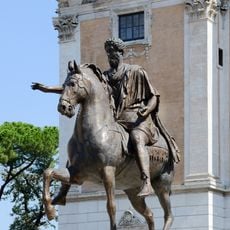
The original bronze equestrian statue of Marcus Aurelius from the 2nd century is kept indoors to protect it from weathering. A copy now stands on the square in front of the museum.
The community of curious travelers
AroundUs brings together thousands of curated places, local tips, and hidden gems, enriched daily by 92,683 contributors worldwide.