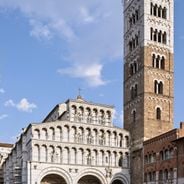
Lucca Cathedral, Roman Catholic cathedral in Lucca, Italy
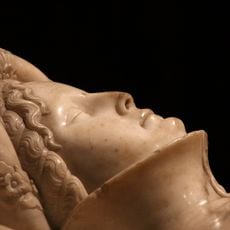
Lucca Cathedral is a church building featuring a grand marble facade with three arches, decorated with intricate sculptures and columns in pink, green, and white stone. The interior holds the tomb of Ilaria del Carretto by Jacopo della Quercia, along with artworks and chapels from different periods.
A church existed on the site by the 6th century, and in 725 San Martino is documented as the cathedral, replacing Santa Reparata. Bishop Anselm da Baggio began the Romanesque rebuilding around 1060 and consecrated it in 1070, when he was already Pope Alexander II. In 1196 the Opera del Frontespizio was founded to build the upper facade, where Guidetto da Como carved his self-portrait with a parchment dated 1204. From 1308 the apse was extended, reusing carved stone from the older church.
The Volto Santo, a wooden crucifix that legend says was carved by a contemporary of Jesus, reached the church in 782 and is Lucca's most precious relic. Since 1484 it has stood in the small octagonal chapel built by Lucca-born sculptor Matteo Civitali. The face on the crucifix is covered by a dark veil, and the figure is dressed in a richly embroidered tunic.
The west front portico opens onto Piazza San Martino; the Holy Face chapel sits in the nave, and the labyrinth is carved into the right pier of the portico, at eye level. The interior is a Latin cross with a tall central nave and lower side aisles, so the main artworks line the aisles and the apse. The campanile and apse arcades are the surviving Romanesque parts.
On the right pier of the portico is a small labyrinth incised in stone, dated to the 12th or 13th century and possibly older than the one at Chartres. Its Latin inscription names Daedalus of Crete and says that all who entered were lost except Theseus, saved by Ariadne's thread.
The community of curious travelers
AroundUs brings together thousands of curated places, local tips, and hidden gems, enriched daily by 94,670 contributors worldwide.