Arch of Claudius, Triumphal arch near Via Flaminia, Rome, Italy.
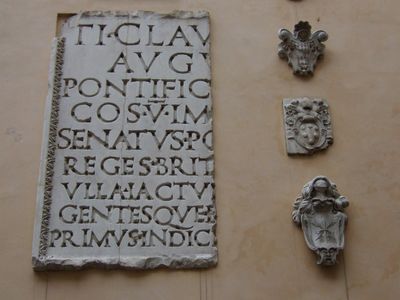
The Arch of Claudius was a triumphal arch in Rome that once spanned the Via Flaminia, built in honor of Emperor Claudius. Only fragments of the structure survive today, and they are kept in the Capitoline Museums, where visitors can see carved reliefs and inscriptions up close.
The Senate ordered the arch built in 51 AD to mark Emperor Claudius's campaign in Britain, which had taken place about eight years before. Over time, the structure was absorbed into the Aqua Virgo aqueduct as it crossed the same road, which eventually led to its partial dismantling in later centuries.
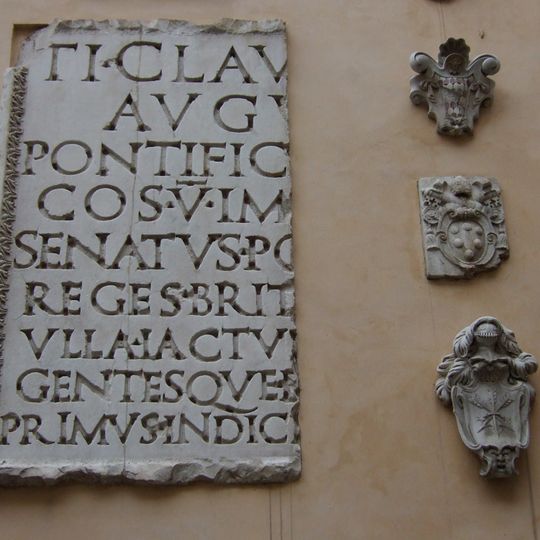
The fragments kept in the Capitoline Museums carry Latin inscriptions celebrating Roman authority over British tribes, and they are still easy to read today. Looking closely at the carved text gives a direct sense of how Rome turned military victories into public statements carved in stone.
The surviving fragments are on display at the Capitoline Museums, which sit on the Capitoline Hill in central Rome and are easy to reach on foot from most of the historic center. Visiting in the morning tends to mean fewer people in the galleries, making it easier to get close to the pieces.
Rather than standing on its own, the arch was built directly into the body of the Aqua Virgo aqueduct where the waterway crossed the Via Flaminia, so the two structures shared the same masonry. This kind of physical merging between a monument and a working aqueduct is rarely seen elsewhere in the ancient Roman world.
The community of curious travelers
AroundUs brings together thousands of curated places, local tips, and hidden gems, enriched daily by 91,992 contributors worldwide.