Palazzo Chigi-Odescalchi, Baroque palace in Rome, Italy
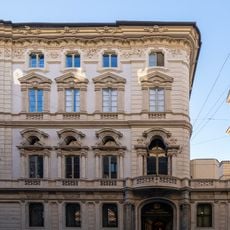
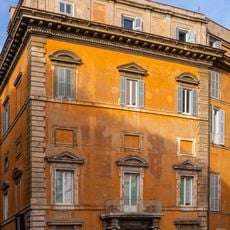
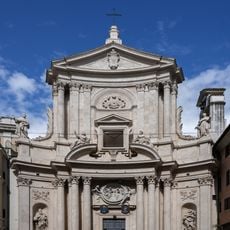
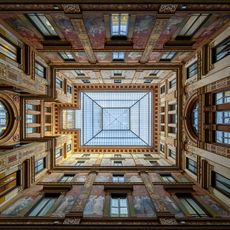
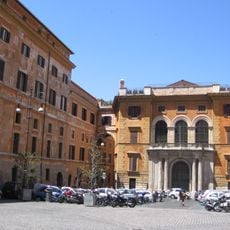
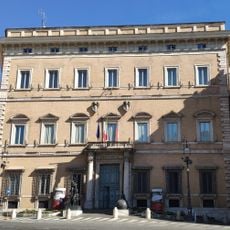
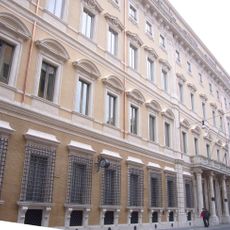
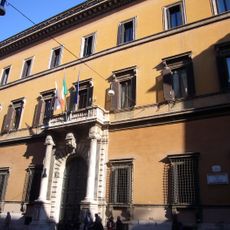
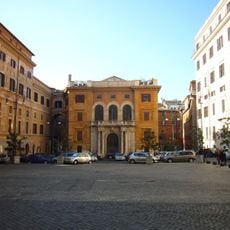
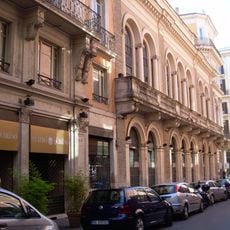
Palazzo Chigi-Odescalchi stands on Piazza Santi Apostoli. Its 17th-century facade by Gian Lorenzo Bernini has a central projection framed by giant pilasters and topped by a balustrade; in the 18th century Nicola Salvi and Luigi Vanvitelli doubled it, giving sixteen pilasters and two portals. The portals open onto a porticoed courtyard by Carlo Maderno, adorned with numerous statues. The Via del Corso front, rebuilt by Raffaello Ojetti after the 1887 fire, is Neo-Renaissance, modelled on 15th-century Florentine palaces.
The Colonna family sold the building to the Ludovisi in 1622, then bought it back; Carlo Maderno had remodelled it, and his porticoed courtyard with Doric columns survives. In 1661 Cardinal Flavio Chigi acquired it and around 1665 Gian Lorenzo Bernini rebuilt the facade with giant pilasters. In 1745 Prince Baldassare Odescalchi bought it and Nicola Salvi and Luigi Vanvitelli doubled the central bay, giving sixteen pilasters and two portals. A fire in 1887 damaged it; Raffaello Ojetti rebuilt the Via del Corso front.
The palace demonstrates how Roman nobility designed their homes and preferred richly decorated facades that displayed their status. Visitors can observe how architectural elements like columns and carved ornaments were used to showcase wealth and importance.
The palace sits on Piazza Santi Apostoli near other important monuments in the historic center. Visitors can view the exterior throughout the year and explore the surrounding squares and streets at their own pace.
Bernini's facade for this palace was reused in his unbuilt design for the Louvre and served as a model for the Royal Palace of Stockholm, designed by Nicodemus Tessin the Younger, who had studied in Bernini's studio.
The community of curious travelers
AroundUs brings together thousands of curated places, local tips, and hidden gems, enriched daily by 94,391 contributors worldwide.