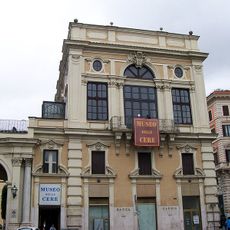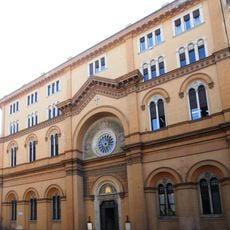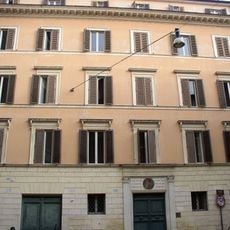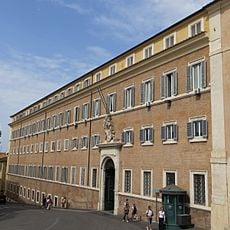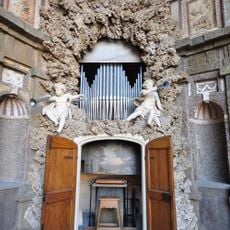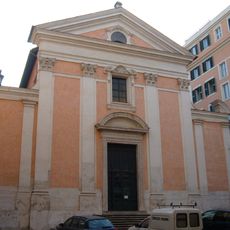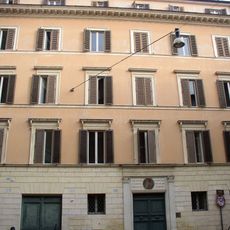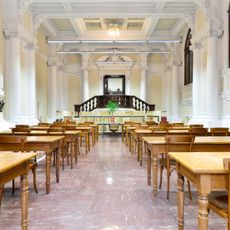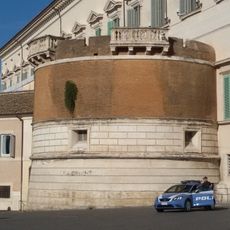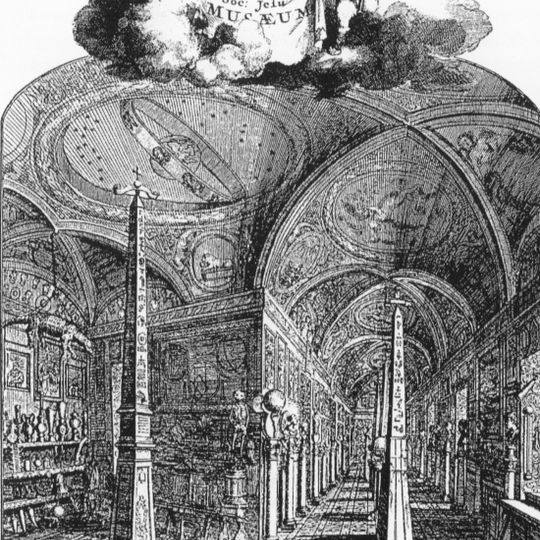
Kircher Collection, Cabinet of curiosities museum in Rome, Italy
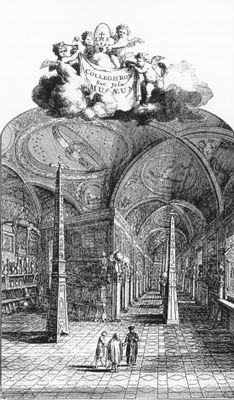
The Kircher Collection is a cabinet of artifacts, scientific instruments, and ancient objects gathered by the Jesuit scholar Athanasius Kircher. The items range from Egyptian finds to mathematical tools and archaeological discoveries from various periods.
The collection began in 1651 through an endowment and grew over more than two centuries with Egyptian finds, mathematical devices, and archaeological discoveries. After Italian unification in 1870, the objects were distributed among different museums in Rome.
The collection shows how 17th-century scholars brought together scientific study and ancient learning by keeping mathematical tools and old objects side by side. This mixing of different fields of knowledge reflects the era's curiosity about how the world worked.
Many original pieces are today scattered across different museums in Rome, including Villa Giulia and the National Museum. Visitors should check which works are currently displayed where to explore the distributed collection.
A catalog from 1678 documents for the first time scientific instruments and archaeological finds arranged together in one collection. This record is considered a forerunner of modern museum documentation.
The community of curious travelers
AroundUs brings together thousands of curated places, local tips, and hidden gems, enriched daily by 91,181 contributors worldwide.